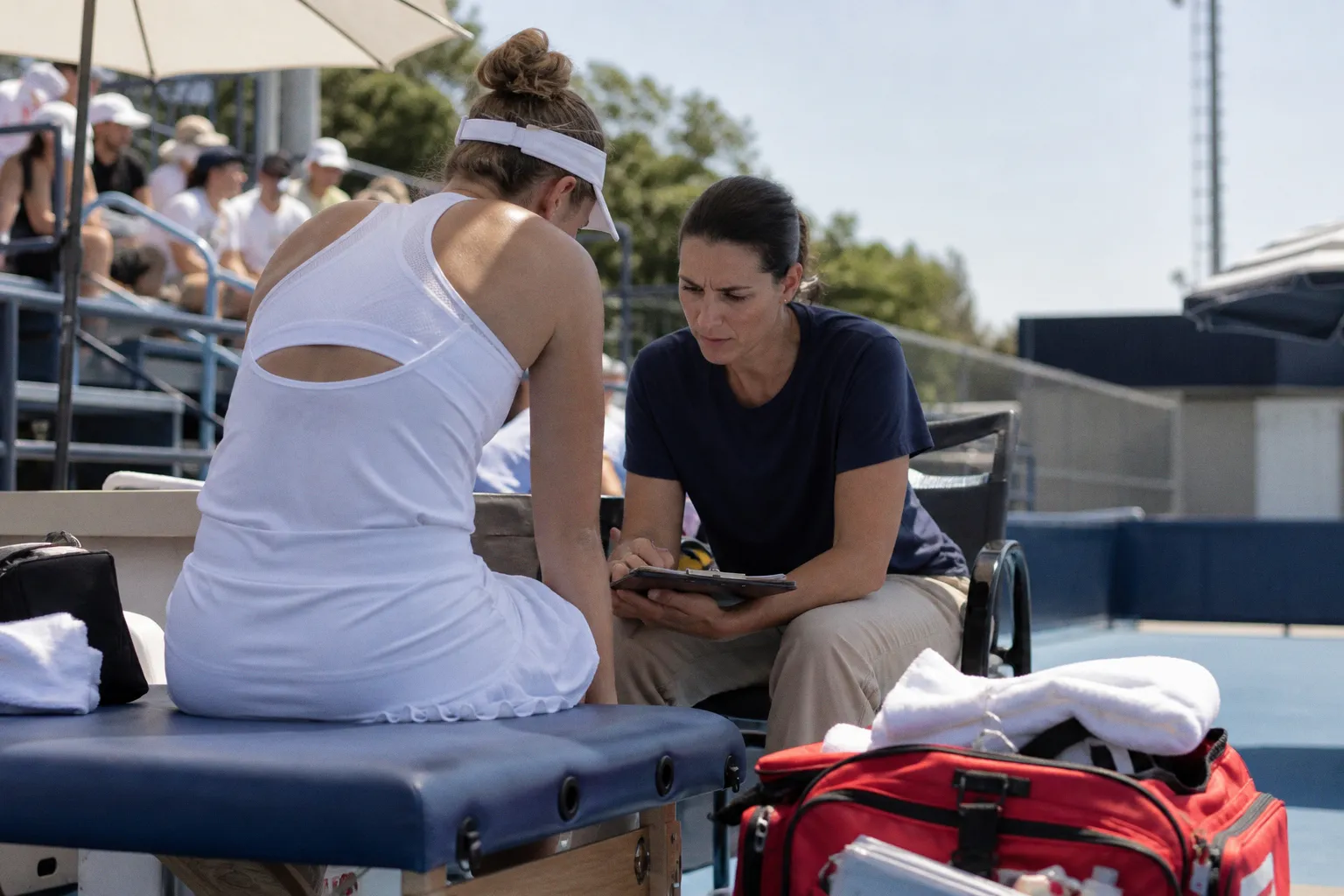
The message matters to tennis because the sport’s polished facade often hides a long season of isolation, pressure and repeated exposure to public failure. The headline is not a diagnosis of any particular player; it is a challenge to the way elite competition notices distress—usually after the player has already begun to unravel.
The problem with waiting for the visible collapse
Tennis is unusually good at making private strain look like a technical problem. A player stops moving well, loses patience between points or begins forcing low-percentage shots, and the discussion quickly turns to footwork, tactics or form. Sometimes that is accurate. Sometimes the racket is merely the loudest symptom.
The report’s central idea is simple: mental health should not be checked only when an athlete is visibly struggling. Routine screening and regular monitoring would move attention away from the familiar crisis model, in which a player has to deteriorate publicly before the system takes notice.
That distinction matters in a sport built around individual accountability. There is no teammate to absorb a bad stretch, no collective structure to disguise cognitive overload. Every hesitation is exposed. Every tactical retreat can be replayed. A player may still be winning while carrying pressure that is already affecting decisions, recovery and the ability to stay present during long matches.
The uncomfortable question is who, inside the sport, is watching for that shift before it becomes impossible to miss.
A tennis issue, not merely a medical one
The wider source cluster also includes coverage of mental health in sport, the relationship between mental health and physical injury during a return to play, and the support of athletes within a university setting. Those headlines point toward the same friction: elite performance is often treated as a narrow equation of fitness, preparation and results, while the athlete’s wider condition is left in the margins.
For tennis, that margin can become a dangerous blind spot. A player returning from injury is not simply rebuilding a serve or regaining court speed. The return also carries uncertainty: whether the body will hold, whether movement will be trusted, and whether one bad point will revive the fear of another setback. The available evidence here does not establish how any particular tennis organization handles that process, so broader conclusions would be premature. But the subject is plainly relevant to match dynamics.
The body language is often read before the context is understood. A player looks detached, irritated or unusually cautious, and the audience supplies a story. The story may be wrong. That is precisely why monitoring cannot be reduced to spectators, commentators or a coach’s instinct from the player box.
What should change around the court
The practical significance of the report lies less in another public statement than in whether routine attention becomes part of an athlete’s normal support structure. Screening, if it is used, should not be treated as a punishment or as evidence that a player is failing the demands of professional sport. The headline argues for regularity, not surveillance after a breakdown.
For tennis organizations, the real test is whether mental health can be discussed before a result forces the conversation. That means treating warning signs as information rather than character flaws, and avoiding the usual performance-language camouflage in which distress is renamed a lack of discipline or competitive edge.
There is also a risk in the opposite direction. Not every bad set is a mental-health crisis, and not every visible act of frustration requires a grand psychological explanation. A serious approach has to resist both denial and melodrama. Players are not machines, but they are not story devices for explaining every missed forehand either.
The report gives the sport a useful standard to measure itself against: notice more, wait less, and stop pretending that elite performance is sustainable when the person producing it is ignored. The scoreboard will still record the collapse. The question is whether anyone is prepared to see it earlier.