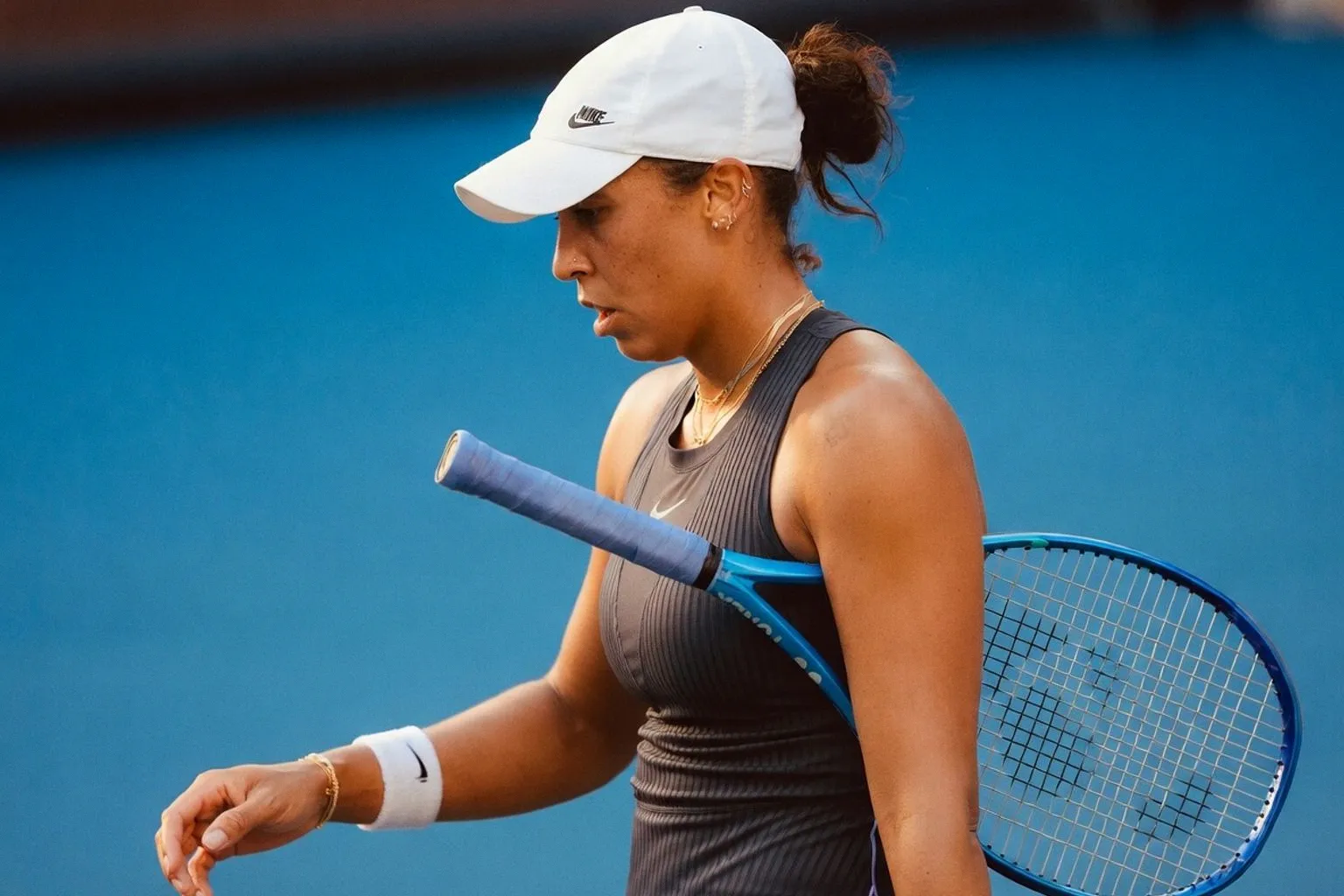
The post-match handshake on a hard court is a small ceremony — racquets lowered, eyes briefly avoiding the player's box, a curt nod that asks the crowd to move on. According to a Yahoo Sports headline circulating this week, that ritual looked different after Madison Keys' latest defeat, with a veteran tennis reporter publicly voicing concern about what the moment revealed. The framing — "Nothing in Sports Is Worth That" — speaks to the uneasy space between a scoreline and the human body that has to absorb it.
The weight of the walk to the bench
A tennis court is, above all, a place where physical reality meets mental endurance, and the gap between those two things can stretch wide in the minutes after a match ends. Whether the surface is the sting of a DecoTurfed hard court or the soft give of European clay, the body carries the friction forward — shoulders tight, legs heavy, the mind still replaying the final game. Whatever Keys showed in that post-match window, the reporter's reaction is a reminder that even champions work through that tension in real time, in front of cameras and crowds that rarely see the cost. The match, in a sense, is only half played on the court — the rest happens in the walk to the towel and the long exhale that no broadcast angle quite captures.
A historical mirror
The tour has seen this kind of weight before, and few careers illustrate the toll as starkly as Andrea Jaeger's. The American climbed to No. 2 in the world at sixteen, became the youngest seed Wimbledon had recorded at fifteen years and nineteen days, and reached two Grand Slam finals — the 1982 French Open, where she took Martina Navratilova to a third-set decider, and the 1983 Wimbledon final against the same opponent. According to a published account of her career, Jaeger later said she lost that Wimbledon match on purpose, claiming she had knocked on Navratilova's door after a row with her father and wanted to avoid disrupting her opponent's preparation.
"I went on court in complete peace knowing that giving the match away was the right thing to do," Jaeger said, as reported. "I had to look myself in the mirror for the rest of my life. It meant more to Martina anyway."
Seven shoulder surgeries followed. She played her final US Open in 1985 at the age of twenty, then stepped away from competition and built the Little Stars Foundation for seriously ill and at-risk children. In September 2006, she was ordained as a nun — a calling she has described with the same directness she once brought to her baseline game, telling one outlet simply that she had "no regrets" about leaving the tour behind.
What to watch on the calendar
The Keys moment, whatever its specifics, sits at the intersection of court conditions and human endurance — a place where the sport's history keeps returning. For readers following the late-season schedule, the practical thread is worth pulling: how a player behaves in those first ten minutes after a loss often tells more about their season than the scoreline does. Watch whether Keys addresses the reaction directly in her next press conference, and whether the reporter's concern finds echoes in coverage of other players carrying heavy workloads into the autumn swing. The tour asks athletes to perform under conditions — physical, mental, atmospheric — that the crowd only glimpses from the stands. When the composure slips after a loss, the sport gets a rare, uncomfortable look at the friction beneath the surface.