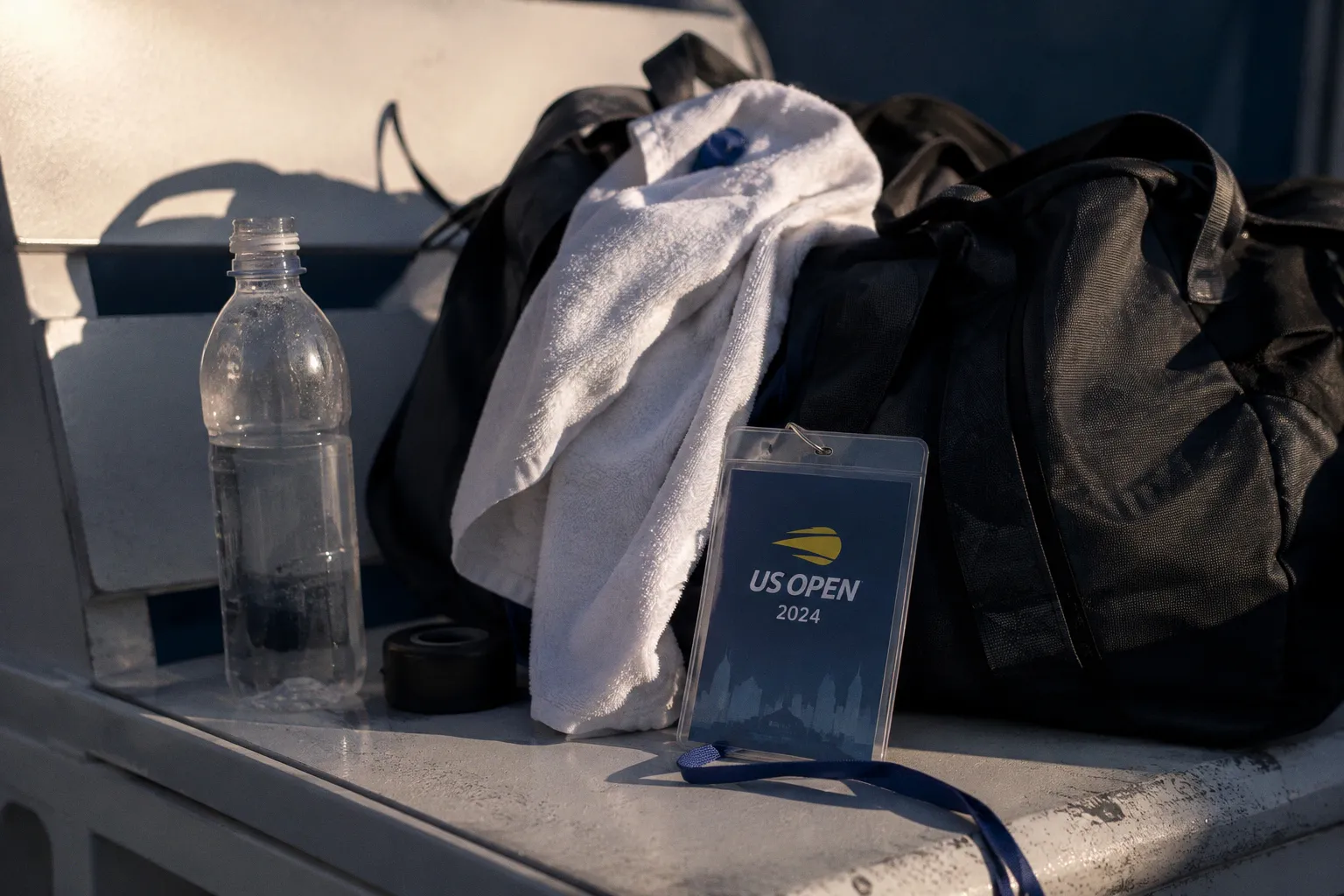
The Guardian reports that Gaël Monfils walked off Louis Armstrong Stadium for the last time as a Grand Slam competitor on Thursday night, falling in straight sets — 6-3, 6-4, 6-3 — to 14th-seeded American Learner Tien in the second round of the US Open. The 40-year-old Frenchman, who has confirmed he will retire at the close of the 2026 season, did not get the fireworks his reputation might have invited; instead, the muggy Flushing Meadows air, the grinding baseline rallies, and the patience of a composed 20-year-old left-hander produced something quieter — and, in its own way, more honest than any scripted finale.
A Surface That Stopped Cooperating
Louis Armstrong's hard court has always rewarded those willing to sustain length and depth, and on Thursday evening the conditions leaned firmly against a 40-year-old who had played only two tour-level events since Roland Garros. Tien, by contrast, seemed constructed for the assignment — willing to extend every exchange, to drag Monfils from corner to corner, to test legs that had already carried a 22-year professional career toward the limits of what they could still give. Monfils was broken in his third service game, and from there the rhythm settled into something he could not disrupt: in the sixth game of the second set, he leaned over a courtside towel box after a 20-shot rally, and the night — for all the crowd noise around him — belonged to the younger man. The inverted statistic said everything. Tien finished with just 20 winners to Monfils's 29, a reminder that the scoreboard rewards survival rather than spectacle.
A Career the Trophies Cannot Measure
Monfils will leave professional tennis with a ledger that looks incomplete to anyone who judges only by silverware: nearly 600 singles wins, roughly $25 million in career earnings, a career-high ranking of No. 6, and just two Grand Slam semifinals — at Roland Garros in 2008 and here at Flushing Meadows in 2016. He came of age in the era of Federer, Nadal, Djokovic, and Murray, and spent his entire prime chasing their shadows. But his style — the tweeners, the aerial forehands, the elastic movement that could swing a point on its own — earned him a following the trophies never could. His farewell week in New York had already become a story before the final ball was struck: a wildcard entry at No. 311 in the world, a mixed doubles semifinal alongside his wife, world No. 9 Elina Svitolina, and then, on the day he turned 40, a 2-6, 6-1, 6-2, 6-0 win over Paraguay's Adolfo Daniel Vallejo that made him the oldest man to win a US Open match since Jimmy Connors in 1992. The Armstrong crowd sang Happy Birthday to him that afternoon. When a reporter asked how he wanted to be remembered, his answer was the simplest one available. "I'm just me, Gaël Monfils."
The Draw Closes Around Him
Monfils has said he will play out the rest of the 2026 season, but the Grand Slam stage has now heard its last bow from him. Tien advances into the third round, the latest marker of a generational transition that has been quietly underway for several seasons. Elsewhere in the men's draw, former champion Daniil Medvedev moved into the round of 16 for the seventh time in eight years with a 6-4, 6-4, 6-4 win over France's Arthur Rinderknech, conceding an early break before settling into his usual metronomic rhythm. On the women's side, defending champion Aryna Sabalenka extended her New York winning streak to 16 matches by dispatching Kamilla Rakhimova 6-3, 6-4 without facing a break point, setting up a fourth-round meeting with Taylor Townsend, who upset 15th seed Diana Shnaider 6-2, 6-7(3), 6-3. Monfils will not be there to watch any of it from inside the ropes — but the Armstrong surface that hosted his farewell will keep rewarding exactly the kind of grinding, attritional tennis that finally, gently, caught up with him.