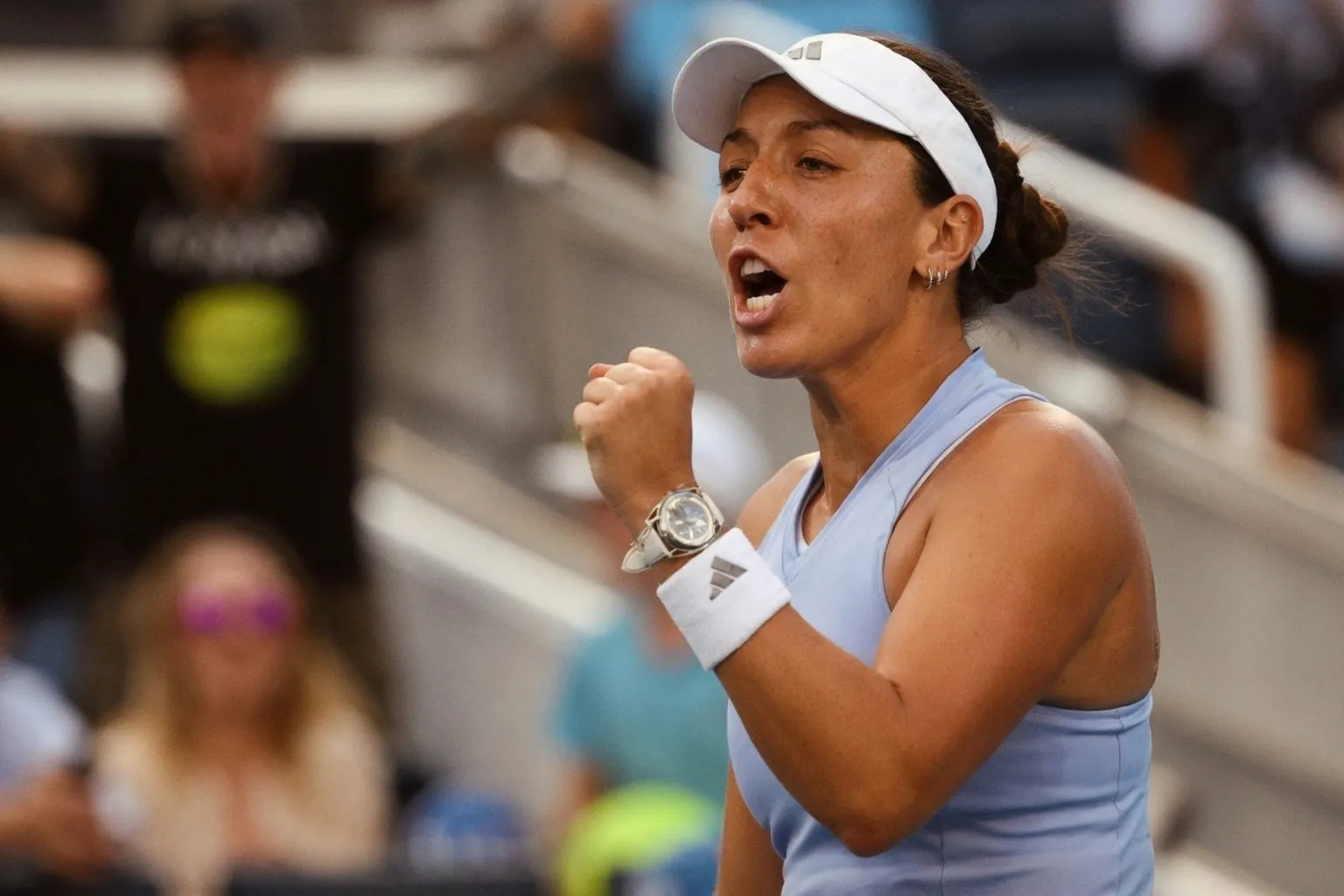
3 Jessica Pegula publicly characterized the conduct of credentialed social media influencers at this US Open as "a bit disrespectful," a measured critique that frames a quantifiable operational problem inside Arthur Ashe Stadium. The remarks followed chair umpire intervention during Naomi Osaka's late-night opening-round victory, where lighting equipment and amplified voices from content creators disrupted match conditions. With close to 100 influencers credentialed by the USTA this tournament, the gap between digital production demands and competitive integrity has narrowed to the dimensions of a single court.
The Variables on Court
Two distinct interference vectors registered during Osaka's 7-6(6), 7-6(3) win over Anastasia Zakharova on Monday night. Acoustic: a group of influencers in an Arthur Ashe suite generated enough volume to require chair umpire Kader Nouni to issue a quiet-down directive. Visual: footage circulated showing an influencer deploying a bright white selfie light while a player tracked serves exceeding 100 mph. Both signals fall outside the standard competitive noise envelope — crowd reactions, ball calls, racket sounds — that return positions are calibrated against.
Pegula addressed the issue after sweeping Sofia Kenin on the same court. Her framing was operational. "I think I can appreciate, you know, the influencers coming and kind of showcasing, like, the US Open experience," Pegula said. "But I do think that it's tough when you see videos like that when they're taking pictures and using the selfie lights. People are down there trying to perform, and it's their career and their job." Her conclusion: "It seems like a bit disrespectful. I think it's gotten a little maybe too much, it feels like, this year. I don't know."
The "Tennis Disneyland" Calculus
New USTA CEO Craig Tiley has set the strategic direction in expansionist terms. In his pre-tournament press conference, Tiley said the goal is to transform the Open into a "tennis Disneyland," with player, youth, and adult experiences layered across the venue footprint. Daniil Medvedev, the former World No. 1, returned a counter-metric. "I think the word 'tennis Disneyland,' I would not like it because it's still a sport, you know, where we fight in a way for our life," Medvedev said. The position: competitive output cannot be subordinated to the entertainment perimeter without eroding the underlying product.
The arithmetic resolves simply. Credentialing expands reach. Reach expands sponsor inventory. Sponsor inventory funds the operation. At what credentialing density does the production layer begin to subtract from the performance layer? Pegula's read — "too much, it feels like, this year" — registers the athletes' working conditions as a competing variable. Medvedev's calculation arrives at the same conclusion through a different operator. Tiley's expansion thesis remains structurally intact, but it now carries an explicit cost line: competitive legitimacy, billed in decibels and lumens.