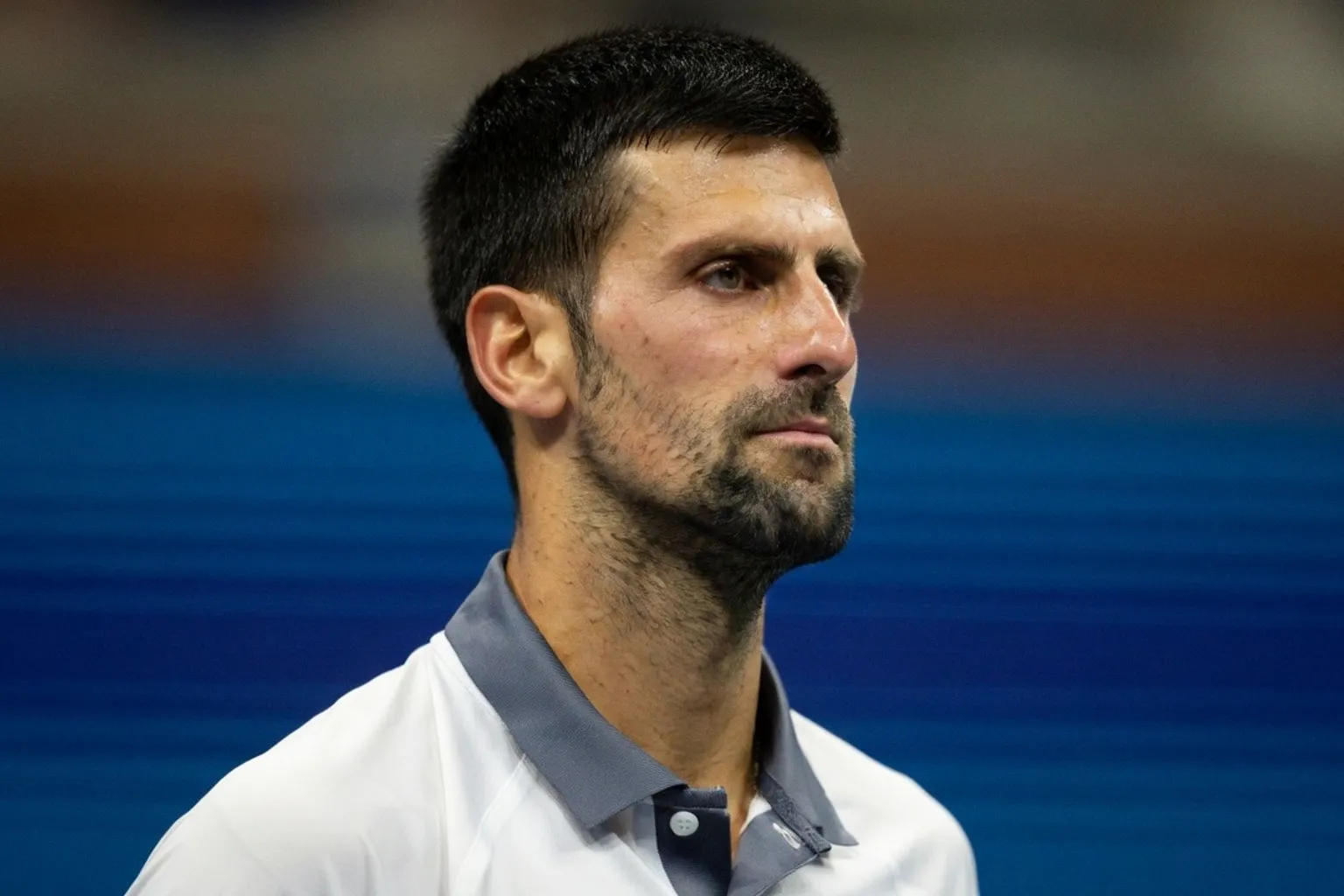
By the close of Sunday's first-round US Open defeat to Mariano Navone, Novak Djokovic was vomiting between points, his stride had shortened, and his shoulders — once the architecture of his serve — looked like they were bracing against themselves. According to CNN's reporting from Flushing Meadows, the loss marked the 39-year-old's worst grand slam result in two decades, and his post-match words carried the weight of a man reckoning with what his body can still ask of him. For an audience that has watched Djokovic rewrite the grammar of longevity, the scene felt less like a bad day and more like a fault line — a quiet fracture in the clay of a career he has, somehow, always managed to fill.
What the court actually revealed
The numbers tell one story — a first-round exit, the earliest in twenty years — but the texture of the match told another, and arguably the more honest one. Djokovic moved like someone negotiating with his own joints, his footwork arriving late on shots that used to find the line on instinct. CNN noted that he had spoken earlier this month about an underlying health issue made worse by heat and humidity, and on Sunday afternoon the conditions seemed to conspire with that issue: by the final set he was bent forward, fighting cramps, the back giving out and the shoulder following. He later told reporters he had carried the problem into practically every match this season — a description that reframes the loss not as a stumble, but as the visible collapse of a strategy built entirely on management. "I didn't enjoy myself," he said. "I think it was obvious that it was an awful feeling on the court for me."
Why the timeline matters now
Only seven months ago Djokovic was contesting the Australian Open final, and just weeks back he reached the Wimbledon semifinal — results that, on paper, placed him as the only realistic counterweight to Carlos Alcaraz and Jannik Sinner. Yet between those peaks sits a reality the tour understands but rarely names out loud: Djokovic is no longer a week-in, week-out competitor. He preserves himself for the majors and treats the rest of the calendar as a tuning room — an approach that has allowed him to manage his body as he has aged, but that, as Sunday showed, leaves almost no margin when something goes wrong. The CNN report observed that he left Flushing Meadows saying he needed time to decide whether his body could keep absorbing this toll, and quoted him adding that the tears in the final set reflected that reckoning. His stated ambition remains the LA Olympics in 2028 — a finish line he has drawn himself; whether the body agrees is now the only question that matters.
The history he has already rewritten once
There is a precedent here, and Djokovic has lived it. In 2017, an elbow injury had observers openly questioning whether his prime was already a memory; twelve months later he held two slams. That arc is worth holding alongside this one — not as a guarantee, but as evidence of how often the retirement narrative has misjudged him. Even this year, his five-set survival of Sinner at Melbourne suggested the warrior mentality had not expired. Still, CNN pointed out that Djokovic has not lifted a major trophy since 2023, and the gap between competing and winning is precisely where the LA Olympic plan will be tested. The tears were not a verdict — Djokovic has never been kind to those — but they were, at last, a question asked out loud.