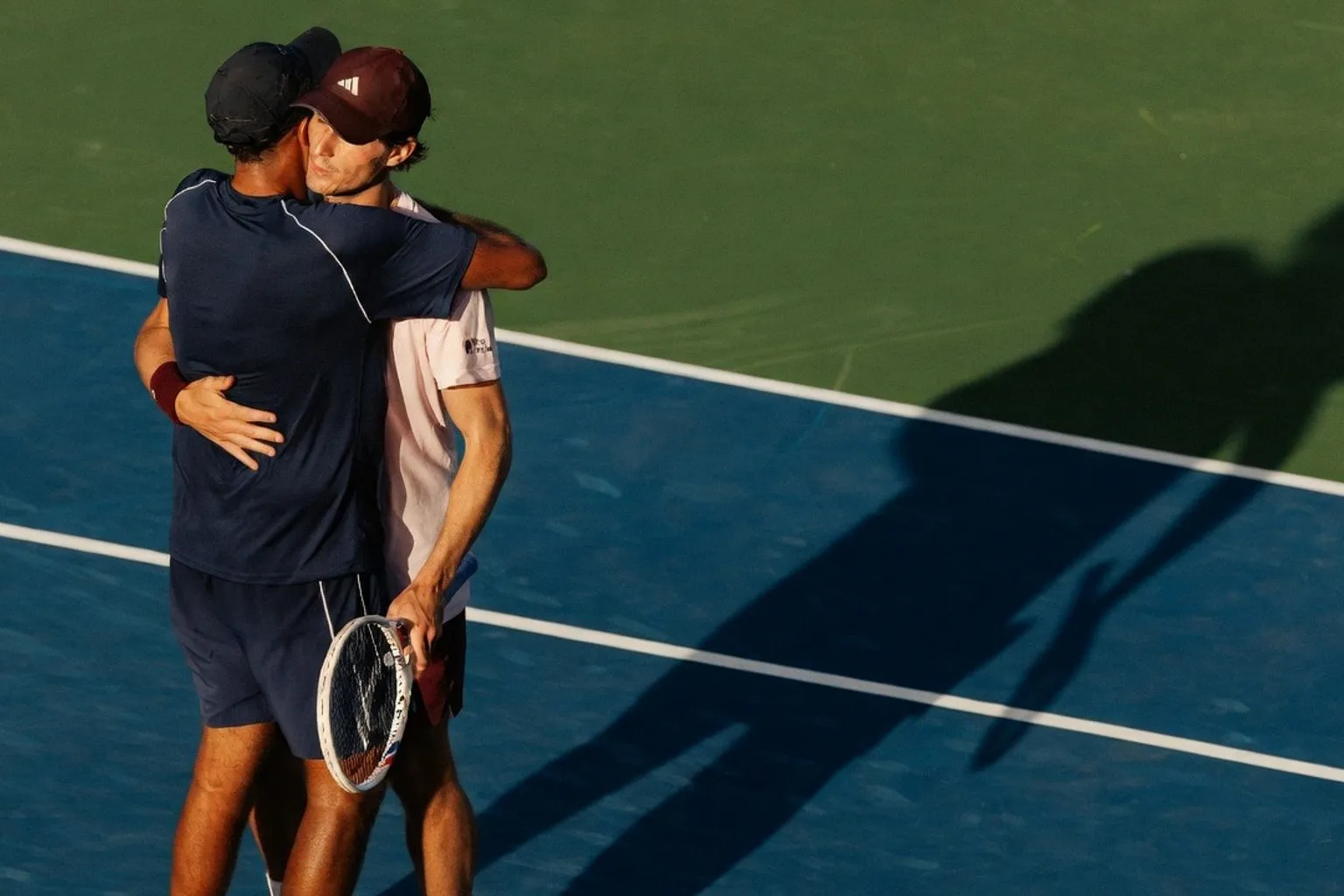
Tennis365 captured the announcement cleanly: Rajeev Ram, 42, is done. The American confirmed his retirement from professional tennis after a semifinal loss in the 2026 US Open doubles draw alongside Britain's Joe Salisbury, beaten by Tim Putz and Kevin Krawietz. Four men's doubles Grand Slams — three of them at Flushing Meadows — two Australian Open mixed doubles trophies with Barbora Krejčíková, two Olympic silvers, and a 2022 stretch at the top of the ATP doubles rankings. The résumé is genuinely stacked. The manner of leaving, though, is where the psychology gets interesting.
The controlled unraveling
Ram didn't frame the exit as a defeat. He framed it as gratitude — a word that, in athlete farewell culture, usually does the heavy lifting that a press conference refuses to do. In a social media statement reported by Tennis365, he wrote that "all good things must come to an end," and laid out a worldview where the daily grind of being "better today than I was yesterday" mattered more than any trophy case. That framing is deliberate. It removes the scoreboard from the emotional calculus and replaces it with something harder to argue with: longevity itself.
The doubles circuit is its own particular kind of attrition. Partners rotate, chemistry has to be rebuilt every tournament, and the cognitive load of calibrating with someone new while maintaining your own shot tolerance — that's a tax singles players never pay. Ram paid it for over two decades. The Venus Williams anecdote from the 2024 Paris Olympics captures it cleanly. As Williams put it after their silver medal run: "With Serena, I expect to win — I've got to be honest… We [her and Ram] had no idea how we were going to play together, so the emotion is almost even bigger because … you don't know what to expect." Two strangers on court, no rehearsal, reaching a final. That isn't craft — that's psychological bandwidth most players can't sustain.
What the exit actually costs
Here's the part nobody writes in the farewell posts. Ram wasn't a singles star. He was an infrastructure piece — the steady hand at the net, the return specialist, the partner who made someone else's career arc click into place. Salisbury's path forward now requires recalibration. The American doubles ecosystem loses a reference point younger teams leaned on for tactical templates. And the US Open, where Ram won three of his four majors, loses a recurring storyline: the veteran grinding through early rounds like the draw owed him nothing.
Ram closed his statement by addressing his late father directly — "I miss you. I love you. Thank you. I hope I made you the proudest." It's the kind of line that public relations teams usually scrub. Ram kept it in. For a player who spent two decades selling the art of being better than yesterday, that's the most honest serve of his career.