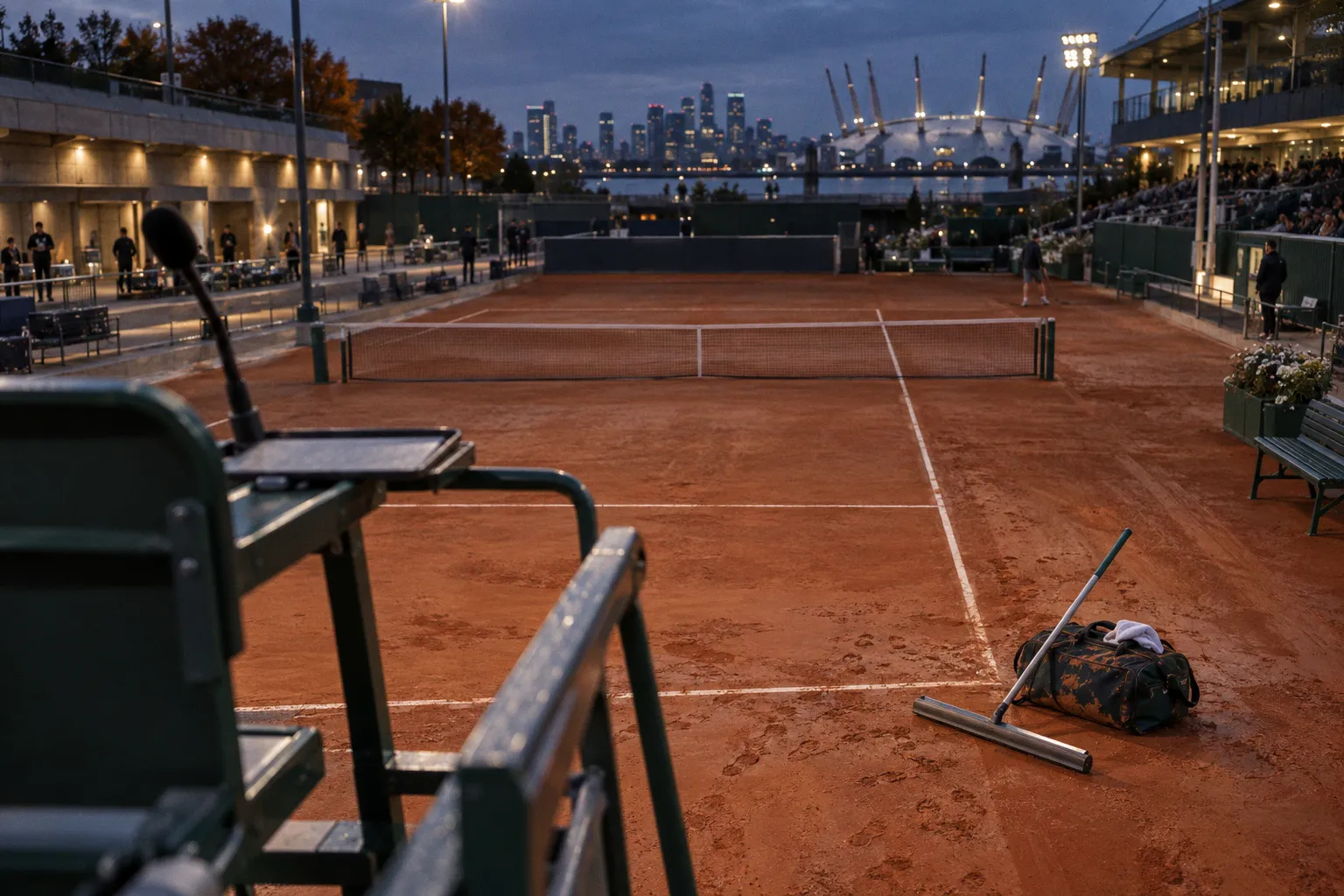
According to the federation's published schedule, the 2026 Laver Cup Open Practice Day hands ticket-holders open-court access to both Team Europe and Team World as they prepare for the competition. Every pound of ticket revenue, the LTA notes, flows toward its Tennis Foundation and community development programs. The charitable framing is tidy. The psychological reality underneath is messier, and far more interesting.
Practice days, stripped of theater
What the official messaging won't tell you is that practice days are where the carefully managed facade finally gives way. There's no walk-on music, no umpire presiding, no broadcast graphics framing every routine as mythic. Two squads share a facility, trade courts, and occasionally drift close enough to exchange a glance across a rope. The cognitive load redistributes itself entirely. Players who will spend the weekend trying to dismantle each other now navigate the strange, slightly charged intimacy of a shared warm-up block — and the body language, for anyone watching closely, reveals everything the post-match presser is trained to obscure.
The question worth sitting with isn't who hits the cleaner ballbag-to-ballbag exchange. It's who can't help but watch. Established names tend to drift toward whatever court Djokovic or Alcaraz occupies. Rising players pretend not to notice while stealing peripheral glances. The hierarchy of a sport announces itself in curiosity, not ceremony — and Open Practice Day is one of the few places that hierarchy becomes visible without a scoreboard attached to confirm it.
The shadow that still owns the room
This is, after all, the Laver Cup — the event that turned Federer's farewell into its most enduring image, Nadal visibly emotional at the net, the entire spectacle freighted with a kind of ceremonial weight the tournament has spent years trying to inherit. Recent reporting notes that Grigor Dimitrov has spoken about sharing Djokovic's lingering sense of loss over Federer and Nadal stepping away from full-time competition. That grief isn't a private matter confined to the players. The Open Practice Day sells proximity to that mythology as much as it sells forehands — and the federation understands the arithmetic better than the press release admits.
The O2 will fill this week with fans hoping for a glimpse of the old guard, or at minimum the next cohort inheriting its mantle. People don't queue for a practice day just to watch backhands. They queue to watch rivals coexist before they're forced to fight. The LTA knows the difference between a charity initiative and a commodity, and has priced the latter accordingly.
What the ticket actually buys
If you're heading to The O2, the tennis is the least interesting thing on offer. Watch the margins. Note who drifts toward whom between drills, who adjusts their warm-up routine when a future opponent walks past their court, who manages to treat the whole afternoon as just another training block. The real event runs in the spaces between ball-strikes — in the half-second hesitation before a nod, the restraint when a rival glances their way, the small performative indifference that betrays exactly how much each player is tracking the other. Proximity to that particular theater rarely comes cheap, and Open Practice Day is one of the few windows the tour cracks open to let fans see it without a commentator translating the subtext in real time.