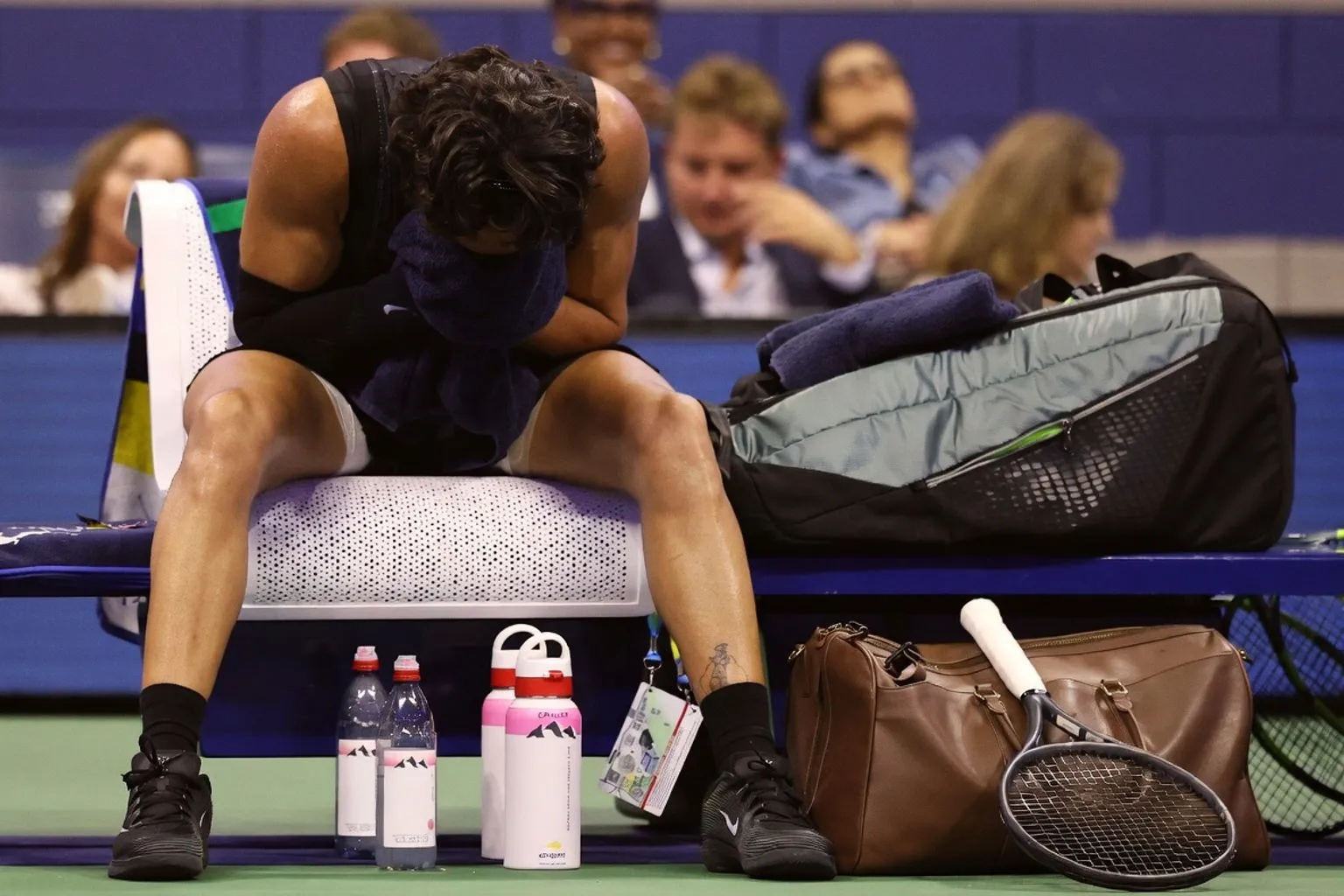
The verdict is in — and so is the backlash, according to Yahoo Sports, whose headline frames a prominent WTA figure rushing to Carlos Alcaraz's defense after a chorus of tennis experts publicly dissected what the publication labels an "unfair call" at the US Open. The framing alone — "Career Ended Because of It" — does the work of a thousand-word column: one veteran watching another get suffocated under expert consensus and recognizing, with the clarity only distance brings, what that pressure really costs a player still assembling his ceiling.
The irony cuts both ways. Tennis commentary thrives on dissection — on reading the micro-decisions of elite players like contested line calls of their own — and then balks at the fallout when those readings circle back onto a competitor mid-tournament. A WTA icon publicly shielding a rival tour's flagship talent isn't altruism theater. It's one professional telling the rest of the room: you're breaking something you don't understand.
Salisbury's Quiet Verdict
While the Alcaraz discourse churns, the US Open delivered a quieter, more permanent verdict. Joe Salisbury, Britain's former world No. 1 in doubles, announced his retirement at 34 shortly after a semi-final exit alongside Rajeev Ram, his partner through the most decorated stretch of his career. Six Grand Slam doubles titles. Three consecutive US Open men's doubles crowns with Ram. The numbers sketch one arc; the timing of the exit sketches another.
Salisbury expressed gratitude in his announcement — the polished vocabulary of a professional exit — but the mechanics are familiar to anyone who has watched a champion age in public: a body at 34 confronting a sport that converts hesitation directly into loss, and a competitor deciding the next hill isn't worth the climb. The tennis world, per Yahoo News Australia, has already begun its tribute circuit. Tributes are cheap. The harder question is what Salisbury's departure quietly signals about doubles longevity in a tour economy increasingly obsessed with the singles marquee.
What These Headlines Share
Two stories, one fortnight in New York, both exposing the same pressure architecture from different angles. For Alcaraz, it's the external — the cognitive load of performing while experts publicly debate the calls shaping his matches, each take another weight added to the mental stack. For Salisbury, it's the internal — the precise moment a champion's cost-benefit ledger finally balances toward "no." Neither is the underdog fairy tale the tennis media reflexively reaches for. Both are the unglamorous machinery underneath an elite career: knowing when the grind stops rewarding, and being honest about it before the decision is made for you.
Watch Alcaraz's next press conference. Body language will tell you more than any defender's words — whether the controversy has settled into useful fuel or begun unraveling something subtler. And watch whether Salisbury's exit sparks a real conversation about doubles sustainability, or whether the tour thanks him politely, updates the roster, and scrolls past. Both stories, in the end, are about what the sport demands and what it eventually reclaims.