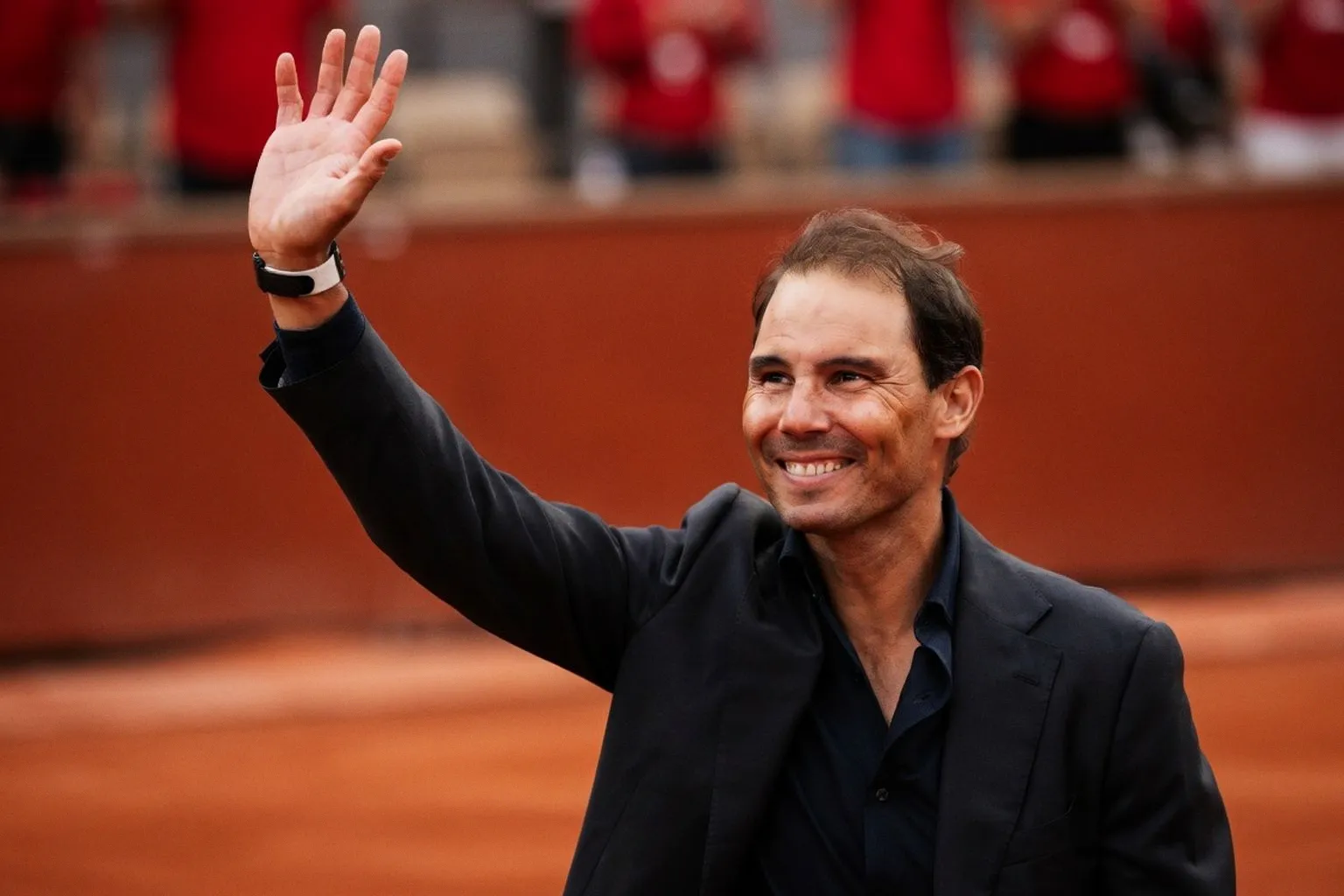
Rafael Nadal is set to return to a tennis court for the first time since his retirement, with reports from TennisTemple indicating an exhibition next month at the Rafa Nadal Academy to mark the institution's tenth anniversary. Multiple outlets, including tennismajors.com, frame the appearance as a singular event rather than a competitive comeback.
The Timeline Signal
The relevant data point is the gap. Nadal's last competitive match and his first post-retirement court appearance are separated by a stretch in which his playing activity dropped to zero. That kind of absence carries predictable consequences: match-sharpness decay in return positioning, rally-tolerance regression, and a drop in first-serve percentage under live conditions. An exhibition neutralises most of those variables — no ranking points, no extended-format structure, no travel pressure. What remains is the raw physical layer: footwork, swing biomechanics under ball-strike conditions, and cardiovascular output during extended rallies. None of these are match-sharpness dependent, but all of them degrade measurably with months of competitive inactivity. The exhibition framework — short sets, no consequence, familiar surroundings — is specifically designed to suppress the variables that would otherwise expose that decay.
The academy itself has now operated for a full decade. This is not a comeback event in disguise. It is a ceremonial booking, the kind that generates footage rather than telemetry. Read it as such.
What an Exhibition Actually Measures
Conventional match statistics — first-serve percentage, unforced error margins, break-point conversion — degrade rapidly in exhibition contexts. Players loosen their return depth, shorten their recovery windows, and abandon patterns that would otherwise register as repeatable tendencies. The data captured during these sets is closer to practice footage than competitive tape.
What survives is the movement layer. Watch the split-step timing on returns, the contact point on the forehand in transition, and the lateral coverage off the baseline. Those are biomechanical constants — they do not switch off with rankings. If the split-step remains crisp and the forehand contact point holds at waist-to-shoulder height under full extension, the underlying engine is intact. If either element drifts, the question of whether exhibition tennis can ever be repurposed into competitive tennis becomes sharper. The answer, historically, leans negative. Most post-retirement exhibitions function as marketing exercises; the biomechanical data they produce is rarely cleaner than what home practice footage already shows.
What to Watch on Court
Three signals will determine whether the footage out of the academy is genuinely informative or merely ceremonial:
- First-strike forehand depth. Even in relaxed conditions, a heavy topspin forehand should remain visible in the strike zone. A flatter trajectory is a red flag.
- Recovery step efficiency. After wide serves and stretched groundstrokes, the first two recovery steps dictate rally outcomes. This is the variable most likely to show age-related decline, and the hardest one to mask with crowd energy.
- Serve pattern variety. Slice-out-wide, body, and T. If all three zones are tested with reasonable placement accuracy, the shoulder remains functional. If the second serve sits up short, the deceleration profile has shifted.
That is the checklist. Everything else — the applause lines, the handshake moments, the photo ops — is noise.