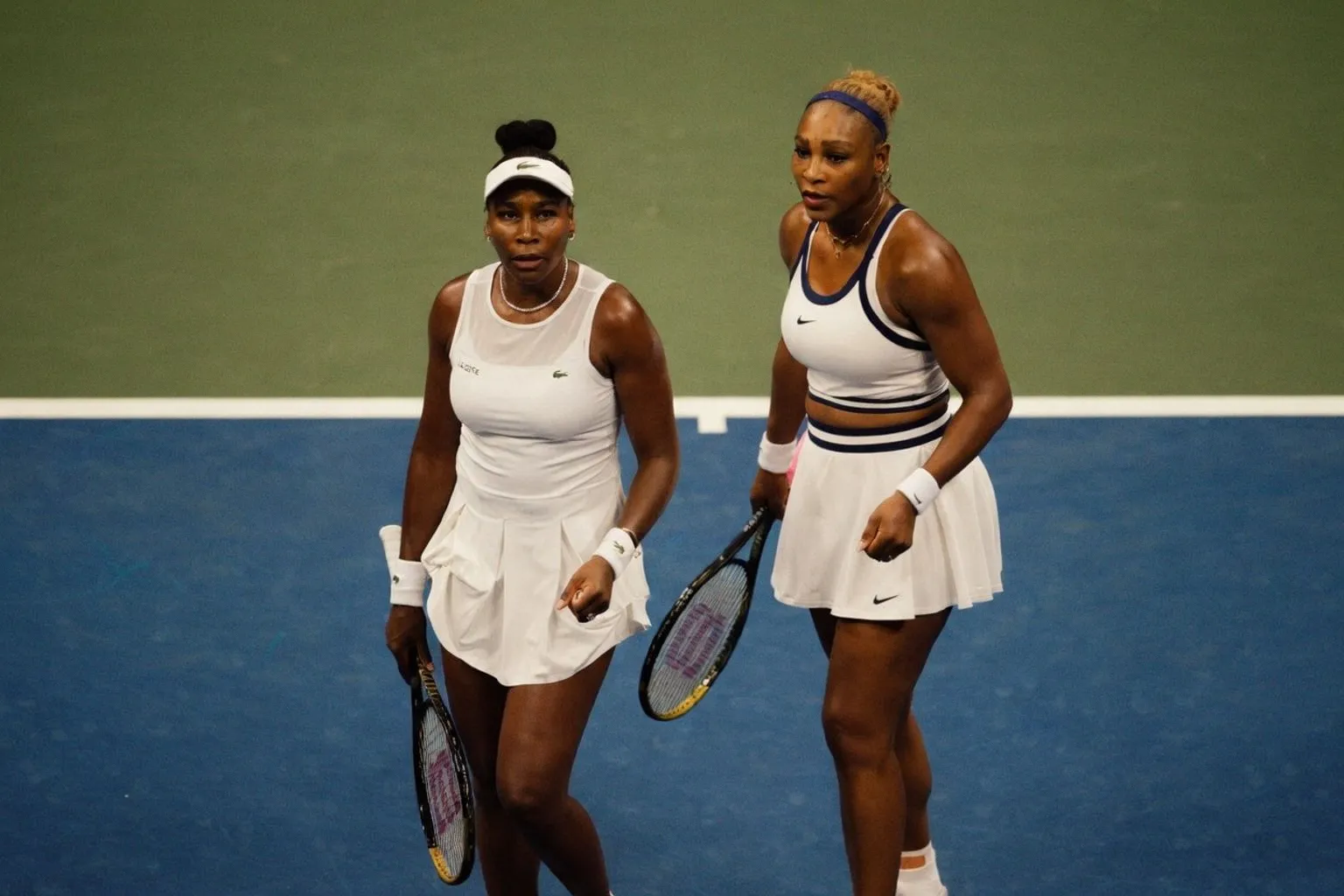
Serena and Venus Williams lost their opening-round women’s doubles match to Maya Joint and Chan Hao-ching after fighting back to take the second set 7–6. Then came the exit: smiles, a wave to the crowd, and no press conference.
That combination was enough to send the moment across social media. For some fans, it looked like a graceful farewell from two players who changed the architecture of women’s tennis. For others, the absence from media duties turned the same walk-off into another argument about privilege, access, and what established champions still owe the tournament.
The match ended in attrition, not ceremony
The Williams sisters did not disappear after a routine loss. They dropped the first set, recovered by winning the second 7–6, and then lost the deciding set in a tiebreaker. The scoreline, as reported, describes a hard-fought contest rather than a ceremonial appearance dressed up as competition.
That matters because doubles can expose cognitive load in a particularly unforgiving way. There is no room to retreat into a singles rhythm or wait for the opponent’s level to fall. Every late exchange becomes shared responsibility: one player’s hesitation immediately becomes the other player’s problem. In a deciding tiebreak, the facade of control is usually the first thing to unravel.
At 44 and 46, the sisters entered the US Open carrying a history that no current result could erase. They have won 14 Grand Slam doubles titles together, while their wider careers have made them central figures in the story of women’s tennis. But history does not win the next point. It only makes the consequences of losing more visible.
One walk-off, two competing readings
The viral reaction focused less on the mechanics of the defeat than on the body language afterward. The sisters left the court smiling and waving to the US Open crowd. Fans interpreted the scene as a possible goodbye, although the available reporting does not establish that this was officially their final appearance.
That uncertainty is doing much of the emotional work. Supporters saw two legends acknowledging an audience that had watched them play side by side again. Others saw a familiar exemption from the ordinary rituals of professional tennis. Yahoo Sports and World Tennis Magazine both framed the controversy around the sisters skipping press duties after the doubles loss.
The criticism was not universal, but it was pointed. Some online reactions celebrated the sisters as role models and described their contribution to women’s tennis as invaluable. Another reaction argued that their privileges in tennis should end and questioned the use of wildcards. That is not a settled finding about the tournament’s decisions; it is evidence of the fault line the appearance reopened.
What the episode actually tells us
The cleanest reading is not that the Williams name made the loss irrelevant, nor that one missed press conference cancels decades of achievement. It is that the match placed three pressures on the same frame: competitive decline, public expectation, and the mythology surrounding two icons.
The defeat was real. So was the comeback in the second set. So was the failure to finish the match in the tiebreak. The exit then became a blank screen onto which fans projected either gratitude or resentment.
That is the uncomfortable privilege of sporting icons: even a wave goodbye becomes evidence in a larger argument. Serena and Venus Williams may or may not return to these courts again. What is already clear is that their presence still changes the temperature of the room—and, in tennis, that can be almost as revealing as the scoreboard.