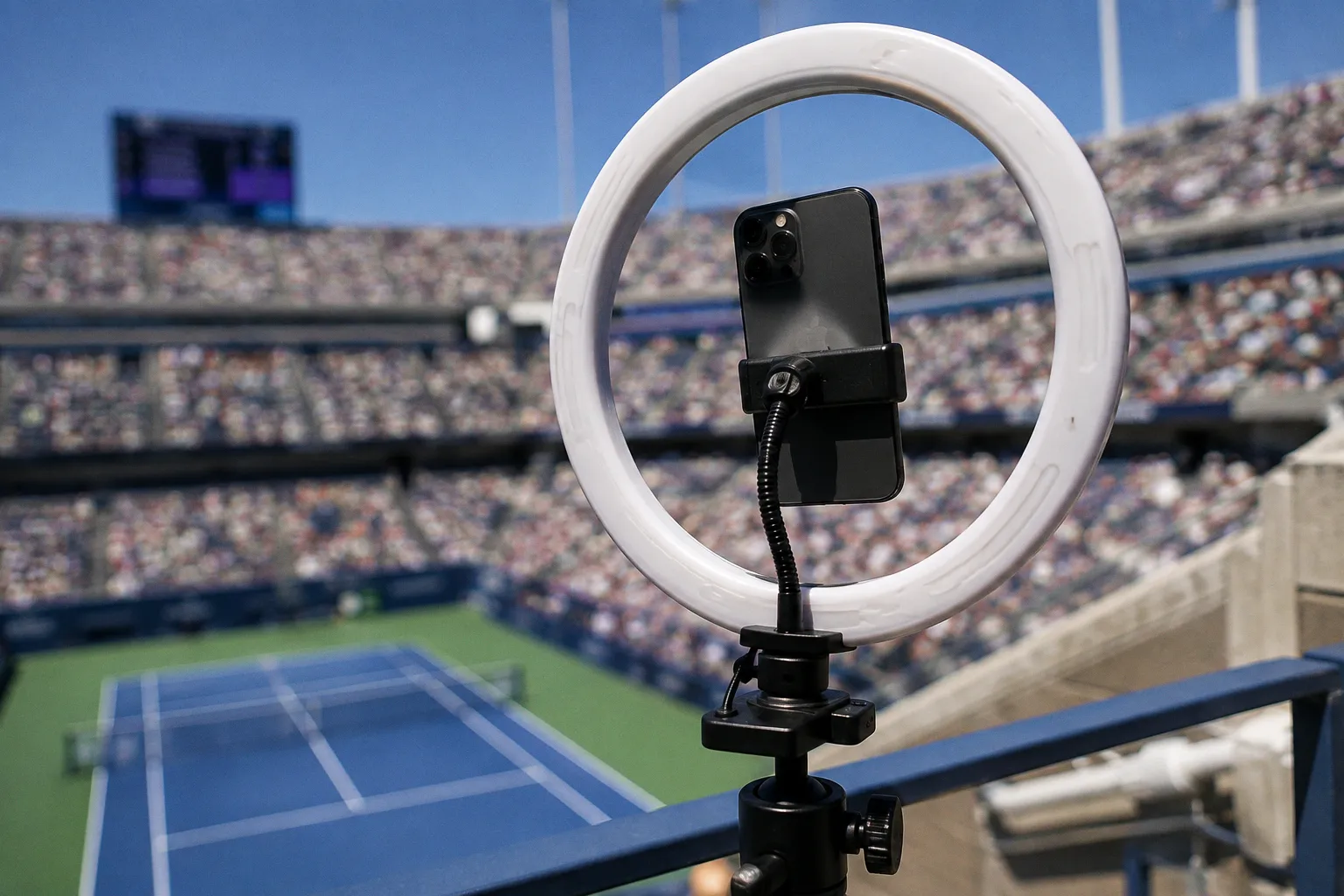
The disruption traced to a suite balcony where content creators filmed with a ring light during play, prompting a pause in Osaka's match against Anastasia Zakharova. The four-time Grand Slam winner revisited the incident in her post-match press conference after defeating Katerina Siniakova in Round 2.
Court Conditions as a Variable
Osaka was asked directly whether the disruption registered during her opening match. Her response: she does not typically monitor crowd activity, yet on this occasion, shouting from the suite section was audible enough to register as a distraction. The lighting apparatus, she noted, was a non-factor for her personally, though the acoustic intrusion reached her opponent as well. The umpire intervened repeatedly, an unusually high call frequency for a Grand Slam main draw match.
The footage that circulated showed one individual in a polkadot dress posing with a ring light while points were live. Osaka framed the issue in procedural terms: spectators attending a sporting event are expected to read the relevant etiquette beforehand.
Etiquette vs. Audience Expansion
Coco Gauff, the world No. 4, addressed the same topic after her Round 2 victory over Paula Badosa. Her position is categorical — influencer attendance is not the problem; procedural compliance is. Gauff drew a parallel to red carpet events: attendees adjust their behavior to match the venue's expectations. Tennis, in her framework, operates on the same principle.
Gauff identified two specific violations from the Ashe episode: flash photography during points, and audio capture (filming dialogue for short-form video) mid-rally. She placed partial responsibility on brands hosting the suites, suggesting posted signage could mitigate first-time attendee errors. She also acknowledged that Ashe Stadium's baseline ambient noise is high — a known environmental variable for players accustomed to that venue.
The Operational Question
Both players converged on the same data: the etiquette protocol exists, it was violated, and the fix is procedural. Osaka's reference point is pre-event preparation. Gauff's reference point is venue-level signage and brand accountability. Neither player objected to the demographic expansion; the objection is to the disruption of the playing environment during active points.
What remains open is enforcement. The umpire's authority covers the court and immediate surrounds; suite-level behavior falls under venue and hospitality partner jurisdiction. If Round 1's warning frequency becomes a baseline trend for the tournament, expect the protocols — signage, suite briefings, or stricter flash policies — to be formalized before the next Grand Slam hardcourt event.