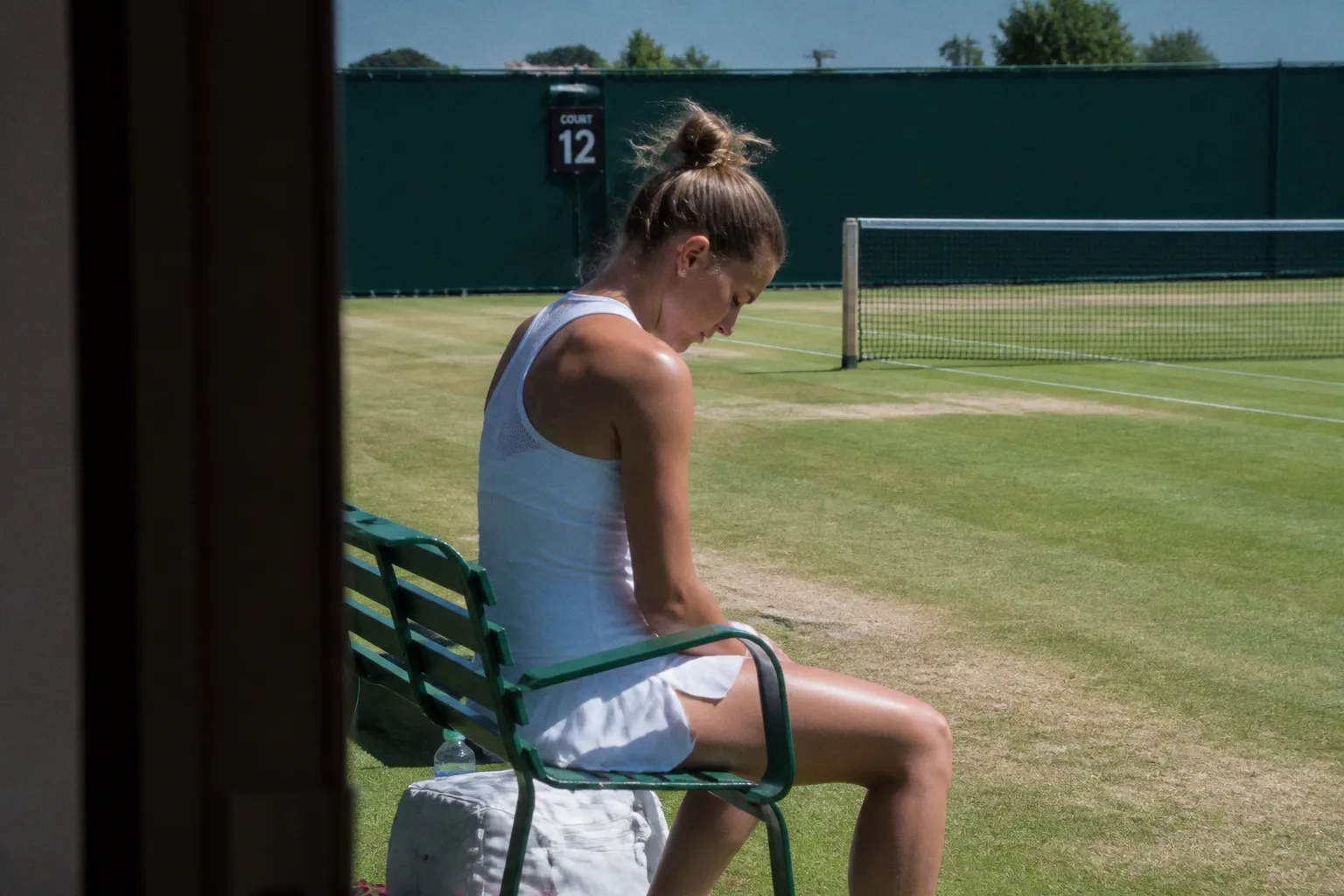
After conquering Wimbledon in one of the gutsiest comebacks the women's game has seen in years, Linda Noskova finds herself in a far more disorienting fight — the one against the strange emptiness that follows a dream fulfilled. According to The Guardian, the 21-year-old Czech is still searching for her competitive edge six weeks after lifting the trophy, candidly admitting her motivation has not returned to its pre-Wimbledon level and that life, infuriatingly, did not pause to let her savor the moment.
The wreckage after the miracle
The numbers tell a familiar story of a champion who came back down to earth fast. In Toronto, the then world No 70 Caty McNally dispatched her in straight sets. Cincinnati offered a steadier pulse — two wins before a last-16 exit to world No 10 Amanda Anisimova — and a doubles crown alongside compatriot Marie Bouzkova that reminded her, at least, that her hands still work.
But scorelines do not capture the more insidious opponent she is now fighting. A first grand slam is supposed to ignite hunger, not drain it; Noskova describes the opposite, a strange gravitational pull of fulfilled ambition dragging the next goal out of focus. There is something almost too honest in the way she dissects it for a press room — clinical, unsentimental, the cadence of a player trying to out-think her own emotional flatness rather than perform around it.
"You wake up from what happened and you start all over," she told The Guardian. "I'm still kind of fighting through that. The motivation is not 100% as it was right before the tournament. But I know that it's hard. I know a lot of players that have dealt with the same issue."
What she's doing with the platform
Fame, she learned, comes with its own homework. Her post-Wimbledon week in Czechia, by her own description, was "crazy and chaos" — a sudden invasion of new faces, obligations and media attention after years operating beneath the spotlight. A brief Italian reset bought her breathing room, but the tour kept spinning without her.
Now she is redirecting some of that sudden visibility toward environmental causes, hoping to use tennis as a vehicle for issues larger than her own results. It is a sensible pivot, and a humanizing one — a champion admitting that the scoreboard alone can no longer carry the weight of why she plays.
What to watch at the US Open
Watch New York not for whether Noskova can win another major — that question remains legitimately open — but for how she moves between points when the scoreboard is not the story. The body language on break points. The footwork when a rally extends past nine shots. The motivation she says she is waiting for rarely arrives as a thunderclap; it usually returns as a quieter tightening of the grip and a sharper first step into the court.
Her Wimbledon final itself, in retrospect, read like a prologue: five squandered match points, a third-set fight for survival against elder compatriot Karolina Muchova, and the kind of mental recovery the Guardian rightly called one of the most impressive in years. Noskova's next chapter will be written in those small, unglamorous moments — and right now, they are the only thing that matters.