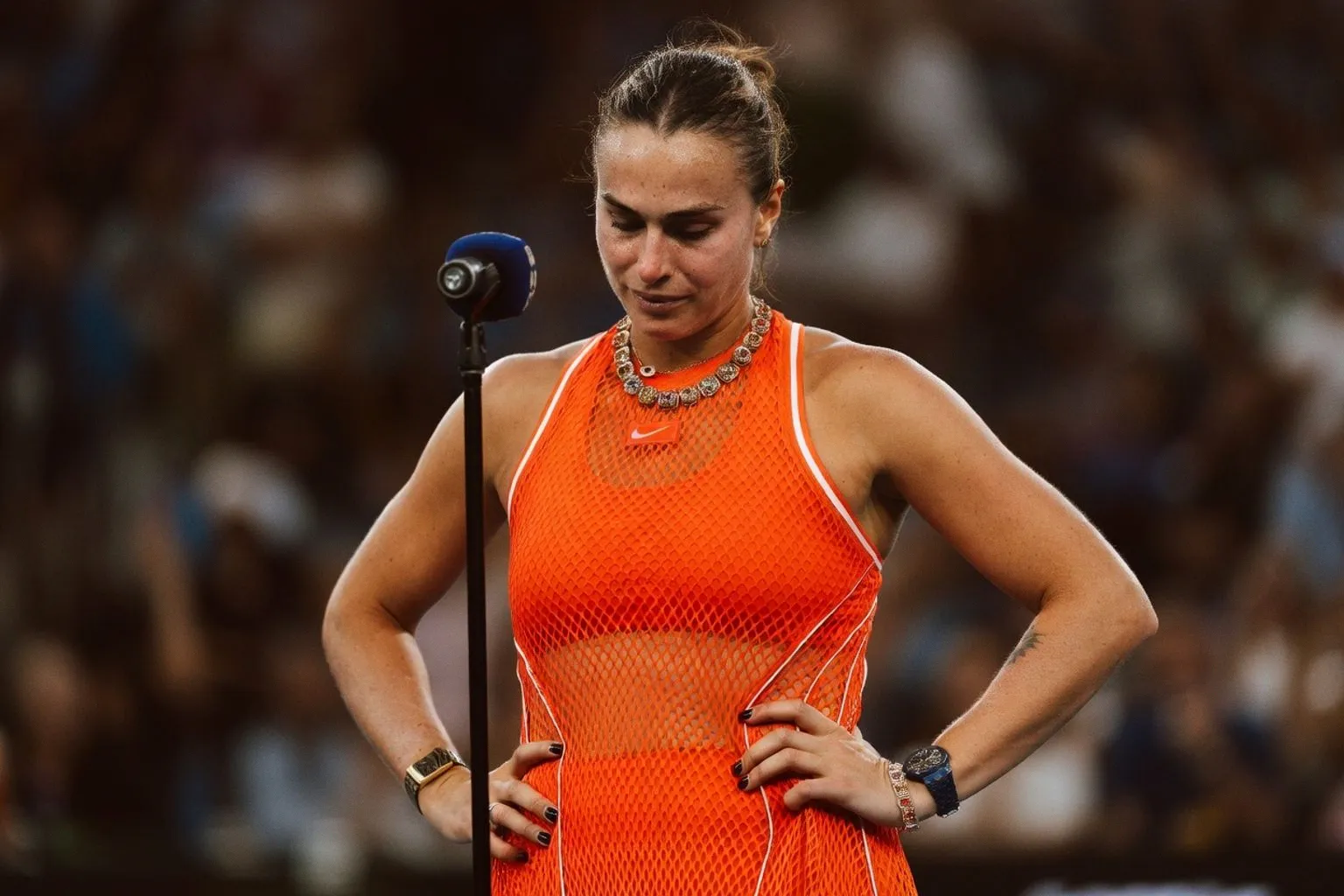
According to The New York Times, Aryna Sabalenka got the full treatment this September at the U.S. Open — a 6-4, 5-7, 6-2 defeat at the hands of Elena Rybakina, followed by the ritual obligation to stand at the microphone, compose herself, and narrate her own unraveling to a global audience. Twelve months earlier, in the same stadium, she had been on the other side of that equation: the winner, smiling wide, while Amanda Anisimova processed a 6-3, 7-6(3) loss. Tennis does not believe in letting anyone forget the symmetry.
The hostage negotiation behind the microphone
"The last thing I want to do right now is give a speech, but I'll try my very best," Sabalenka said, visibly fighting tears after the final. The line landed because it was, momentarily, unscripted. Then the script reasserted itself — the same script every finalist must follow within minutes of the most psychologically expensive afternoon of their year.
Novak Djokovic, a 24-time Grand Slam champion, laid out the cognitive mechanics of the moment during a Wimbledon news conference: "It's not always easy to suppress that and put diplomacy ahead, even though it's important to pay respect and acknowledge the success of your opponent who just beat you."
Suppression. Diplomacy. The vocabulary reads like a hostage negotiation because, functionally, that is what it is. The loser is asked to perform emotional triage in front of millions, and the wrong word — a sigh, a misplaced barb, a flicker of genuine rage — becomes a headline.
How much blood is permitted
Oratory expert Michael Ronayne, director of the Art of Training and Public Speaking course, described the audience's appetite to The New York Times with unnerving precision: "We love people's pain, but on the other hand, we like the idea that that pain might be temporary... We're asking them to bleed in front of us."
The phrasing matters. Bleed, yes — but not too much, and not the wrong color. Anisimova delivered the template at Wimbledon, after a 6-0, 6-0 loss to Iga Świątek — the first double bagel in a Wimbledon final since 1911. Her five-minute tribute to her late mother, woven through with the grief of losing her father Konstantin in 2019 when she was 17, was the kind of wound the room rewards: raw but framed, grief that resolved into grace in real time.
Sabalenka crossed the line once, after a twisting 2025 French Open final loss to Coco Gauff, and the same audience that rewards vulnerability turned prosecutor. The unwritten code is brutally clear: you may bleed in public, you must not blame the victor, and you absolutely may not imply that the sport's etiquette machinery has just ground you down.
She has now sat at both ends of the trophy table in New York. The hardest speech in sports has almost nothing to do with vocabulary. It is about surviving the seconds between the handshake and the microphone — and not letting the mask slip in either direction.