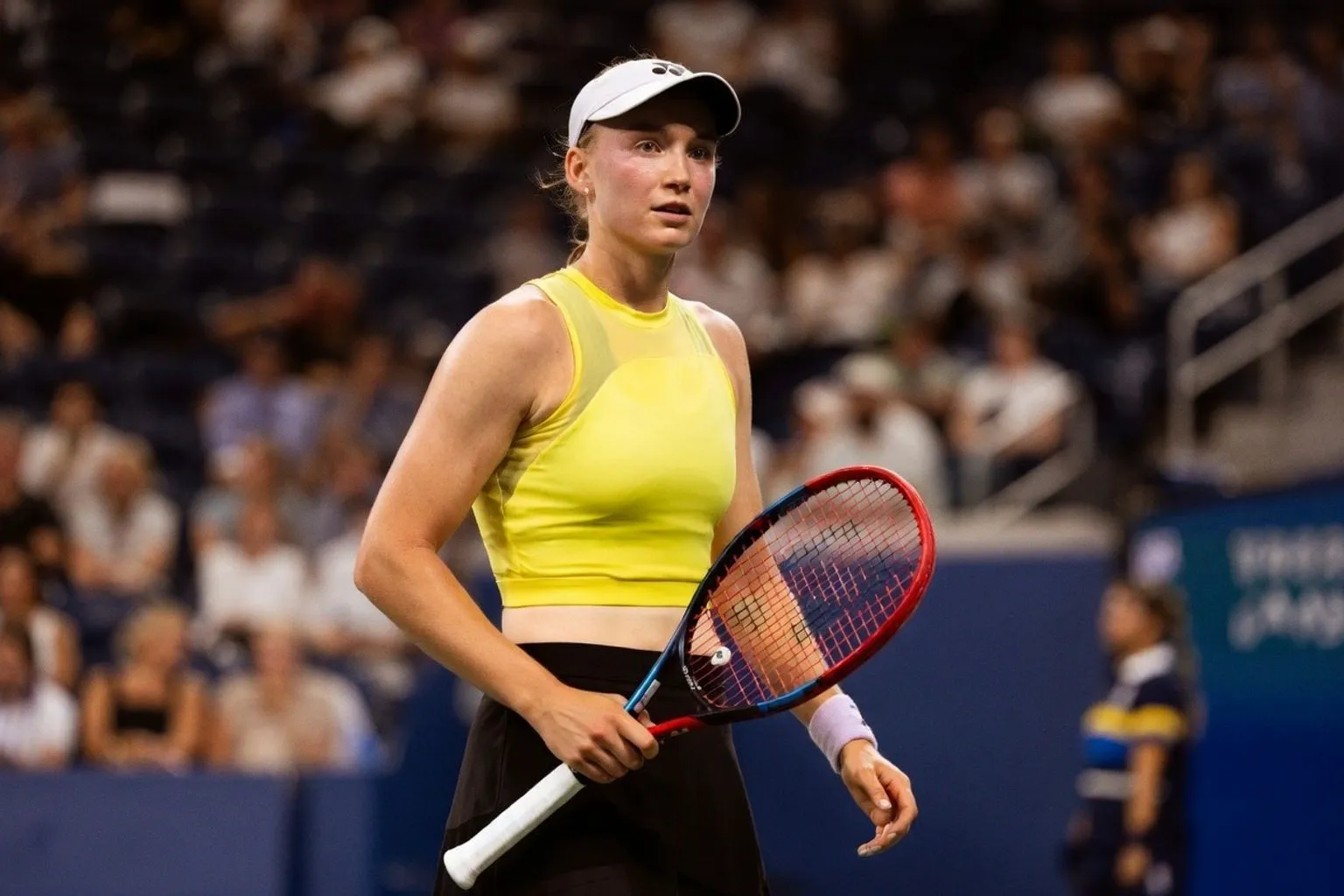
1 ranking, and a fairly precise read on how the most powerful tennis arena in the world feels about her. Her 6-4, 7-5, 6-2 win over Aryna Sabalenka in the final was the exclamation point; the 3-6, 6-4, 6-4 semifinal takedown of home favorite Coco Gauff three nights earlier was where the storyline actually fractured. For an audience that lives for the friction between stars, the fortnight was a rare gift: a champion who refused to soften the moment, a rival who turned 99 weeks at No. 1 into a public dare, and a building that could not quite decide which one to clap for.
The Ashe Paradox
Rybakina's win over Gauff was, on paper, a routine top-ten scrap. On court, it was a slow-motion psychological squeeze. Gauff's serve got broken at 5-3 in the decider; she broke straight back to 4-5; then, serving to stay alive, slipped to 15-40 and watched an overhead float long. The stadium, which had been carrying the home favorite through every changeover, suddenly had nowhere to direct its energy. Fans began sliding toward the exits before Rybakina reached the interview chair, and the new No. 1 did not soften the moment when she got the microphone. As Rybakina told ESPN, "I know you guys wanted her to win." No shrug, no diplomacy — a flat diagnosis handed back to the building that had handed her nothing.
Gauff, gracious in defeat, credited the crowd anyway: "they definitely carry me through a lot of matches here, and I can feel the love all the way down to the last point." The disconnect between the two post-match readings — winner's blank stare, loser's gratitude — is the entire story of the week. One widely shared fan post captured the mood with surgical bluntness: "Not applauding the winner and scampering away before the winner's interview starts is sad." Another piled on, telling the tournament to "clean up its image" alongside complaints about strange smells and influencer behavior, and tacking on a parting shot: "@espn coverage of this tennis match is absolute garbage." Throw in accusations that ESPN's broadcast tilted toward Gauff with repeated cutaways to Michelle Obama in the player's box, and the optics stopped being about tennis.
Sabalenka's Counter-Programming
Hours before Rybakina's semifinal, Sabalenka had walked off Ashe after beating Jessica Pegula, and the contrast in how the two eventual finalists processed a partisan building was the more revealing psychological data point of the evening. Sabalenka told the crowd directly, "You wanted her to win, it's obvious, but thank you for being so respectful" — a line that landed as both acknowledgment and gentle reprimand. Rybakina, three nights later, did not bother with the cushioning. Both choices reveal something about cognitive load under hostile conditions: Sabalenka absorbs the imbalance and converts it into composure; Rybakina names it and lets the silence do the work.
The rivalry now has a texture it did not have a week ago. Per hitc.com, after the final Sabalenka was reminded she had held No. 1 for 99 consecutive weeks. Her answer, with a laugh that was not entirely a laugh: "I think it's an incredible achievement and I don't even know how many weeks I was able to be there... Let's see if Elena can beat me in that... If she continues playing like that I am in trouble." The head-to-head sits at 10-8 in Sabalenka's favor, but the number that matters now is the one she is chasing — and the woman standing on the other side of it.
The Trophy Ceremony and What Comes Next
Sportskeeda reports that the trophy presentation itself drew fire, with fans branding the on-court interviews of both Rybakina and Sabalenka "awkward," and some going further to call the segment "a disaster." The choreography was clumsy; the underlying signal was louder. Two players who had spent the week absorbing very different kinds of hostility met again under the lights and had to perform gratitude in front of the same audience that had spent the fortnight telling them, in its own way, where they ranked.
What matters going forward is not the ceremony tape. It is how Rybakina carries the target. First-time No. 1s in women's tennis have a predictable attrition arc: the off-court demands compress, the field tightens, and the locker room scents blood. Rybakina's week suggested she will not flatter anyone with false warmth, but her press conference tone was also notably measured — none of the prickly deflection that derailed her 2022 breakthrough. Sabalenka, meanwhile, has now lost two Grand Slam finals this season and chose humor over bitterness in the immediate aftermath. The mental ledger between them is closer than the rankings suggest, and the next time they meet, the crowd will not be a variable. For Sabalenka, that might be the most uncomfortable adjustment of all.