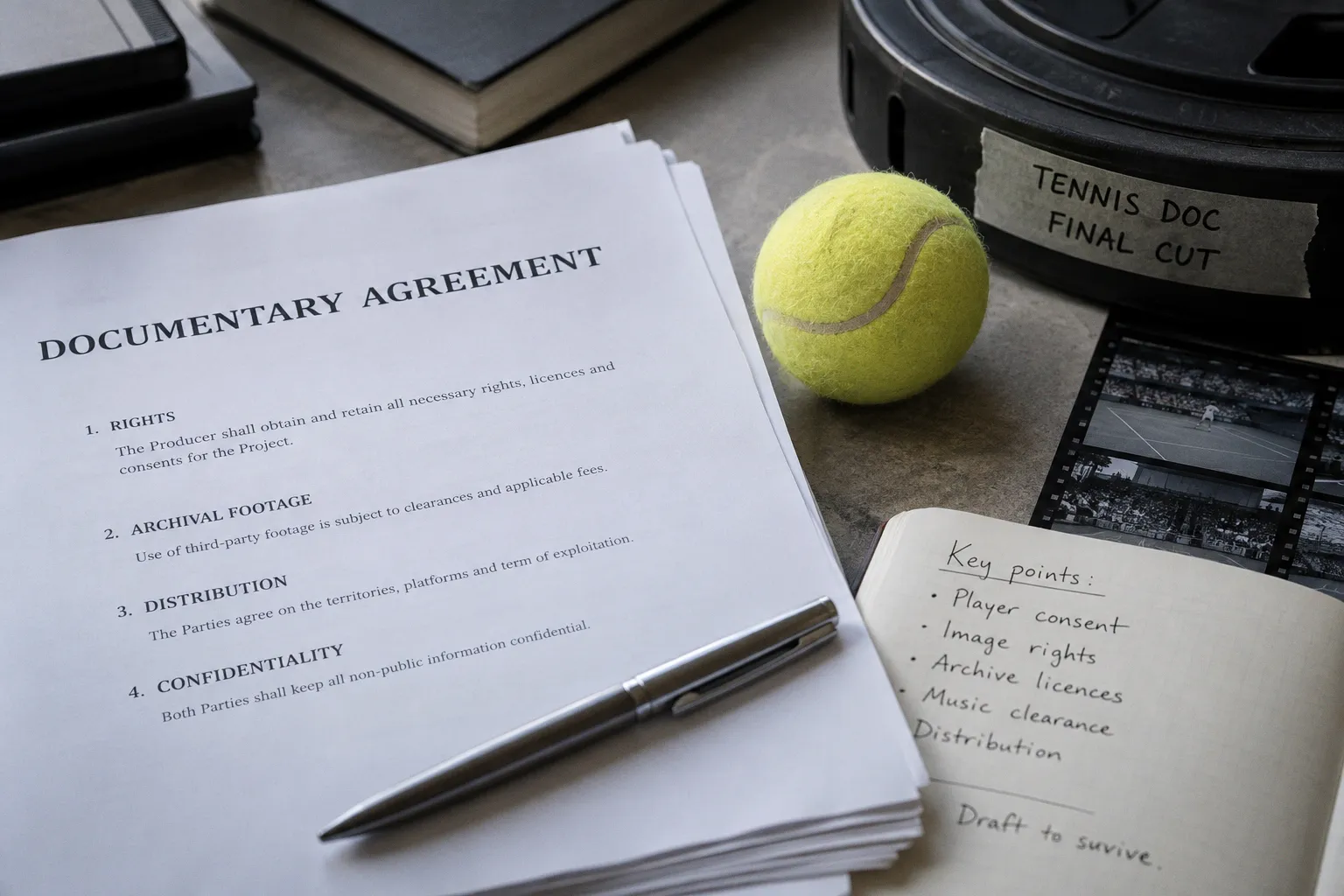
The finished sports documentary arrives looking inevitable: the slow-motion forehand, the archival tear, the narrator intoning something about legacy. What the viewer never sees is the legal scaffolding that determined which version of the story even reached the editing room.
The framing is deliberate — before a single frame is shot, the documentary already exists as a contract.
For tennis specifically, the stakes are unusually high. The sport trades in rivalries: sustained, multi-decade friction between personalities who rarely speak off the court and almost never reconcile in public. That friction is the product. But friction is also a legal liability.
What "legal anatomy" actually means for tennis docs
The phrase itself is revealing. Anatomy implies structure — the rights stack that holds every documentary together: archive footage clearances, player releases, venue access, broadcaster pre-emption clauses, editorial approval windows. Each layer is a filter. A project built around two rivals needs both camps on board, which usually means both camps retain some form of veto over how they're portrayed.
The implication for the viewer is uncomfortable. The "definitive" portrait of any rivalry is, in practice, the version both sides could tolerate. The body language that survives into the final cut is the body language nobody objected to. The dramatic pause, the famous snub, the unspoken tension — all of it cleared in advance.
The streaming giveaway and the curated canon
Separately, Unboxholics reported that what it calls one of the greatest sports documentaries ever has been made free on ERTFLIX. The framing is generous; the logic is familiar — older titles recycled to drive platform engagement while newer, more legally fraught productions remain unfinished, gated, or quietly shelved once the negotiation cost exceeds the expected return.
What both stories together expose is the gap between the documentary as cultural object and the documentary as commodity. Tennis audiences are conditioned to consume rivalries as mythology: the cold stare, the grudging handshake, the years of unfinished business. The legal infrastructure is a reminder that mythology is negotiated, not discovered. Even the silences in a documentary are someone else's settlement.
How to read a tennis documentary after this
For anyone planning to watch the next major tennis doc — or reconsidering the last one — the practical move is not cynicism but pattern recognition. Who produced it? Which camps are credited as consultants or executive producers? Does the archive footage carry visible broadcaster watermarks, and from which era of rights deals? Are the interviews limited to athletes already deep into the promotional cycle of their own legacy?
None of these are aesthetic details. They are the fingerprints of which permissions shaped the cut.
The LawInSport piece is worth returning to on its own terms: a reminder that the finished product is only the last draft that survived the lawyers. The rivalry on screen is real. The version of it you're watching is not.