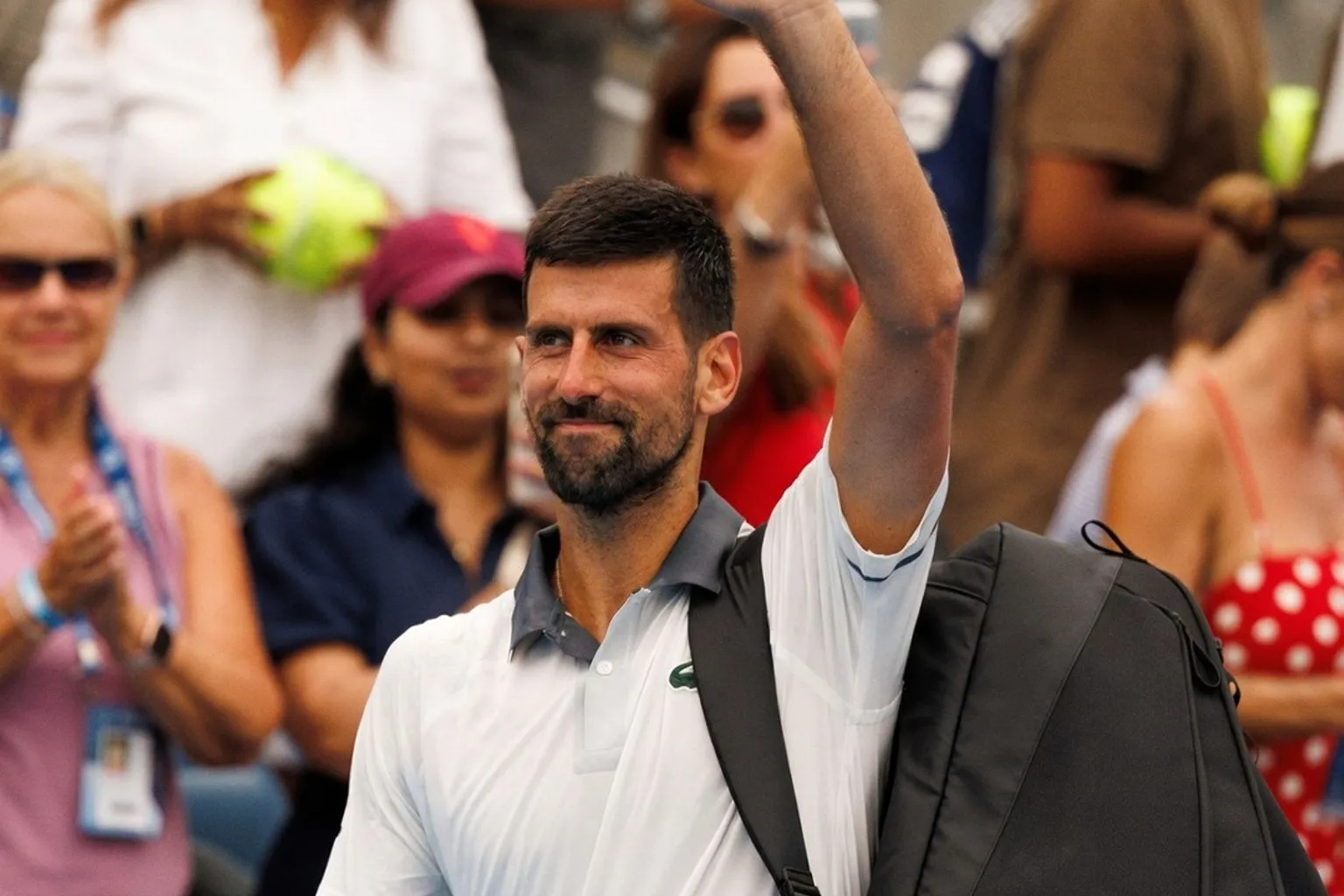
Tennis365 reports that the 39-year-old Serbian then lost his opening-round match to Argentina’s Thiago Agustin Tirante after taking the first set comfortably. The result matters less as a single upset than as another visible test of Djokovic’s physical margin—and of the increasingly unstable rules around interruptions.
A match that turned on attrition
Djokovic did not unravel from the opening ball. He controlled the first set, then found himself in a much less forgiving contest as the conditions took their toll. After holding serve in an epic game lasting 18 minutes, he required medical attention before eventually falling to Tirante.
That sequence is familiar in the late stages of a champion’s career: the facade of control remains intact until one long exchange, one extended service game, or one hostile stretch of weather exposes the cognitive load underneath. The scoreline can still look competitive. The body, less diplomatic, keeps its own ledger.
Tennis365 described the defeat as another gruelling loss for Djokovic and reported that the episode prompted debate over injury timeouts and comfort breaks. Former coach Brad Gilbert called for changes to both rules, including a return to a three-minute medical timeout and limits on bathroom breaks. His criticism was aimed at the structure, not simply at Djokovic, but the timing made the Serbian’s match the obvious flashpoint.
The rulebook is becoming part of the rivalry
Gilbert’s argument was blunt: medical timeouts should not allow a player to interrupt an opponent’s service game without consequence, particularly when the problem is pre-existing. He suggested that a player unable to continue during the opponent’s service game should forfeit points until the physio arrives, then either resume on serve or retire.
The complaint is not isolated. Tennis365 also pointed to recent controversy involving breaks and medical timeouts in other matches, including incidents involving Rafael Jodar, Denis Shapovalov, Felix Auger-Aliassime and Alejandro Davidovich Fokina. Auger-Aliassime has argued that stopping during an opponent’s service game is an unacceptable advantage.
This is where tennis’s polished facade starts to crack. The sport wants medical care to be humane, competition to be fair, and momentum to remain sacred. Those demands collide most violently when a top player is visibly struggling and the opponent is left waiting beside the baseline. The pause may be legitimate; the suspicion is almost automatic.
What the retirement talk actually establishes
People.com has published an exclusive report titled Novak Djokovic Shares Look at Life Beyond the Tennis Court in Revealing Doc — and When He’ll Retire. Tennis365 has separately used the Cincinnati defeat to frame the match as a possible retirement hint.
But the available evidence does not include Djokovic’s comments from the documentary or a confirmed retirement date. That distinction matters. A headline can signal that the question is being discussed; it cannot, by itself, establish a timetable.
For now, the solid evidence is narrower and more revealing: Djokovic still possesses enough control to take a set comfortably, but the physical cost of surviving long matches is becoming harder to disguise. The Cincinnati defeat did not settle when he will leave tennis. It showed why the question keeps returning—with the body, the rules and the old champion’s margins all beginning to argue at once.