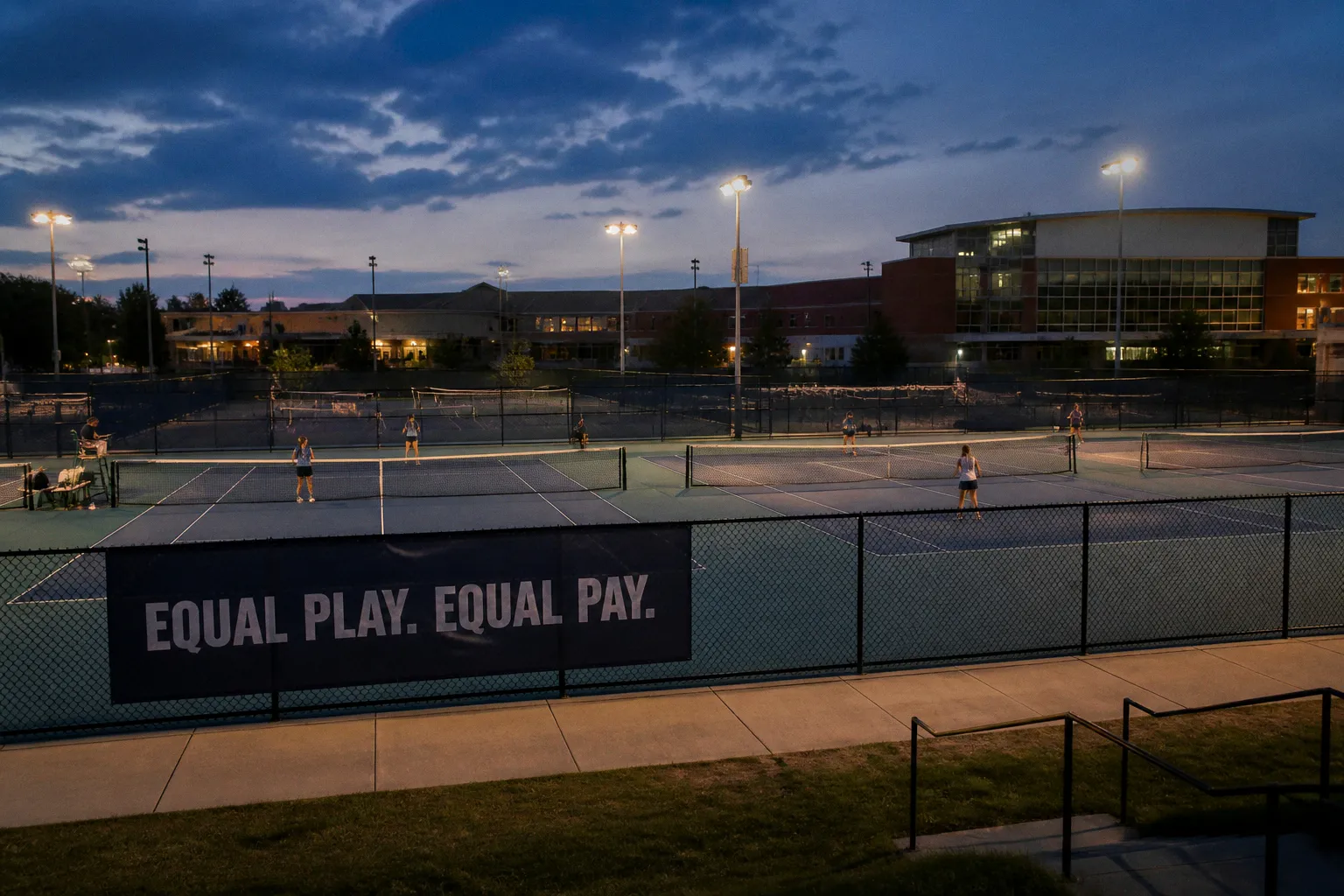
It was extracted, year after year, by athletes who understood visibility as its own currency — and who refused to perform gratitude for scraps.
King, Osaka, and the Tennis Thread
For a tennis audience, the obvious entry point is "Groundbreakers," hosted by Billie Jean King. King has spent decades converting her own legacy into leverage, and this project is no exception — a 50-year retrospective framed through athletes who actually moved the needle. Naomi Osaka sits alongside Jackie Joyner-Kersee, Chloe Kim, Nancy Lieberman, Suni Lee, Julie Foudy and Diana Flores. The lineup itself is an argument: cross-discipline, cross-generational, deliberately stacked.
For a sport still arguing over how to monetize its stars, Osaka's presence is a quiet tell. Her public battles with media attention, mental health, and the machinery of expectation would have been unimaginable in King's 1970s — when the fight was simply to be allowed on the same court. The target, though, remains identical: who gets seen, who gets paid, who gets remembered.
The Other Two — and the Pattern Beneath Them
"Home Court" follows Cambodian American basketball player Ashley Chea through family pressure, identity, and a devastating knee injury — the kind of arc that doubles as a case study in mental resilience under relentless external expectation. "Playing Like a Girl: The House That Rob Built," an Emmy winner, traces the University of Montana Lady Griz program and the unglamorous work of building something from a standing start. All three are available through PBS Documentaries on Prime Video.
Read together, they map the same structural problem from different angles. Forbes notes that Title IX, passed in 1972, prohibited sex-based discrimination in federally funded education programs — a legal lever, not a cultural one. The documentaries show what that legal lever couldn't legislate: how race, class, and immigrant status layered additional barriers on top of gender, and how each generation of athletes had to recalibrate the fight.
The Frame Worth Pushing Back On
The uneasy subtext of any such list is that curated documentary recommendations tend to flatter the viewer's good intentions more than they challenge them. That's worth saying out loud. Still, the King thread alone earns the queue for tennis fans — particularly given how thin coverage of the women's game remains outside tournament windows, and how quickly "unprecedented visibility" evaporates when ratings dip.
Women's Equality Day, observed August 26, marks the 1920 ratification of the 19th Amendment. The progress since then has been measurable. So has the resistance — and the documentaries, for all their flattering framing, at least make that tension visible.