Two decades into a rivalry that reshaped the sport, the contrast now offers something rarer than who retires first: two athletes dismantling themselves through entirely different fault lines.
The two collapses
There is a particular cruelty in watching a champion unravel in slow motion, and the variety matters. Nadal's erosion has long been visible — the taped knees, the seasons skipped wholesale, the moments on court when the body simply refuses a movement the mind still demands. Djokovic, by his own accounting as reported by CLAY, is dealing with a quieter breakdown. Mental fatigue doesn't announce itself on a scan. It announces itself in the press conference, in the trailing foot on a routine shot, in the answer that sounds like a man auditing his own reasons for showing up.
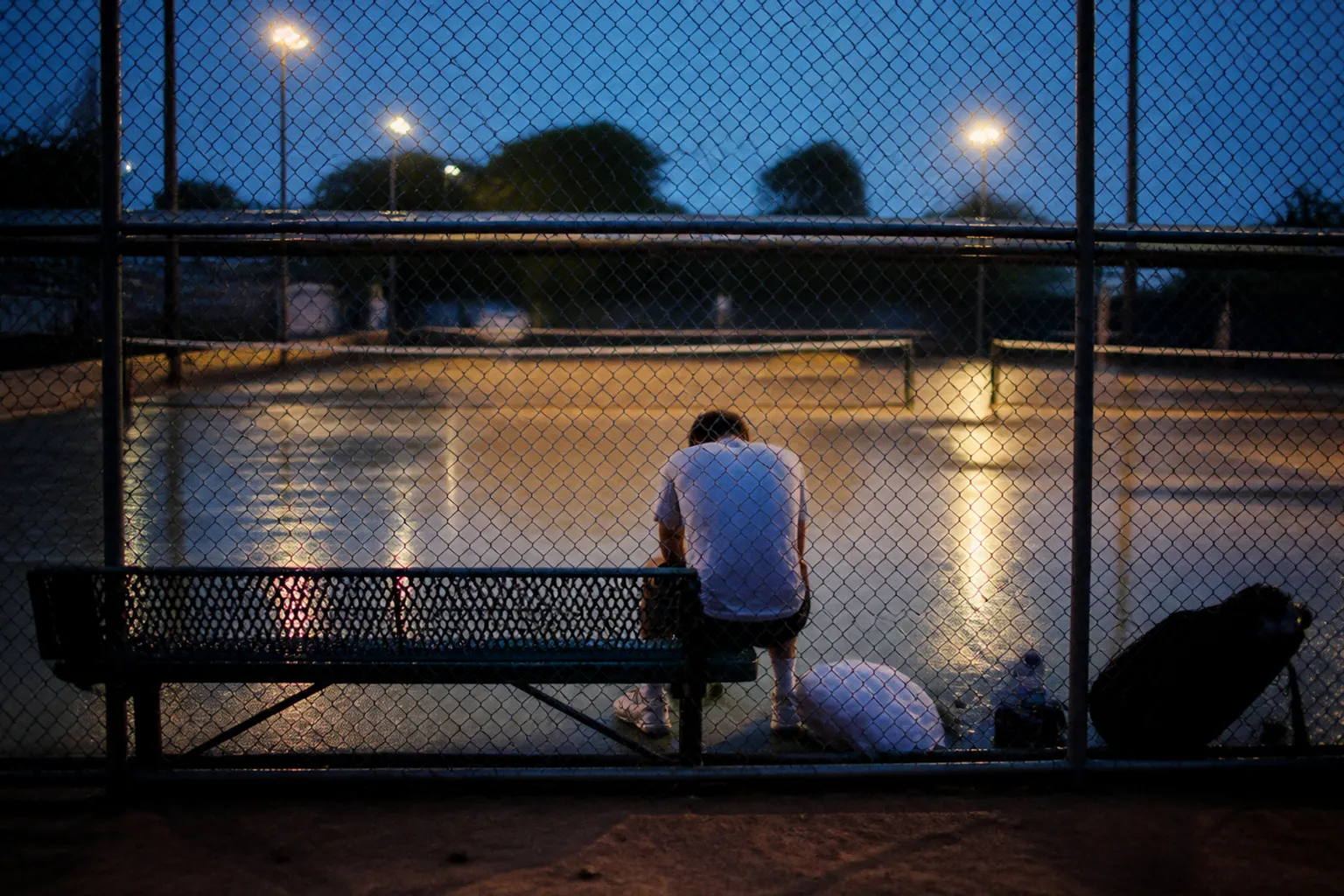
A player can lose to a knee, and there is a strange dignity in that — a body that simply has nothing left to give. A player who loses to motivation is harder to mourn. The highlights stay sharp. The instincts remain. What is gone is the reason to deploy them. And the uncomfortable question lingers: which version of decline is harder to watch?
The loop beneath the skill
The phenomenon Djokovic describes isn't confined to champions in their final season. Performance psychologists have a working term for it — the moment a player's own nervous system begins interfering with a skill the body already knows. It isn't a motivational deficit. It is closer to a stuck loop, one bad moment encoded so deeply that the body starts bracing before the conscious mind gets a vote. The free throw that won't fall. The putt from three feet. The serve that hesitates at match point.
Same mechanism, different sport. An athlete returning from injury who flinches away from a movement the scans cleared months ago. A veteran wrestling with self-doubt during a stretch when nothing goes to plan and confidence erodes faster than the scoreline suggests. The players who find their way through tend to address the hesitation directly, working on the automatic response underneath the conscious thought. Those who don't sometimes spend entire careers treating the symptom as a technical problem, adding reps to a fault that reps will never fix. Tennis, for all its data and biomechanics, doesn't have a shortcut around this one.
What the rest of the run tells us
Djokovic hasn't named a date. Neither has Nadal. What fans should be watching now isn't the scoreline but the micro-decisions that signal which side of the war a player is losing. Medical timeouts arriving earlier than they used to. Drop shots not chased in the third set. Press conference answers that trail off like a man negotiating with himself. These are the tells, and they accumulate faster than anyone wants to admit.
The rivalry was never just about who won the bigger match. It was about two athletes constructing two different definitions of excellence — and discovering, at the end, that those definitions come with two different costs. One will pay in cartilage. The other, apparently, in something harder to measure. Whichever collapse finishes the story first, the other will still be out there, fighting the other half of the same war.