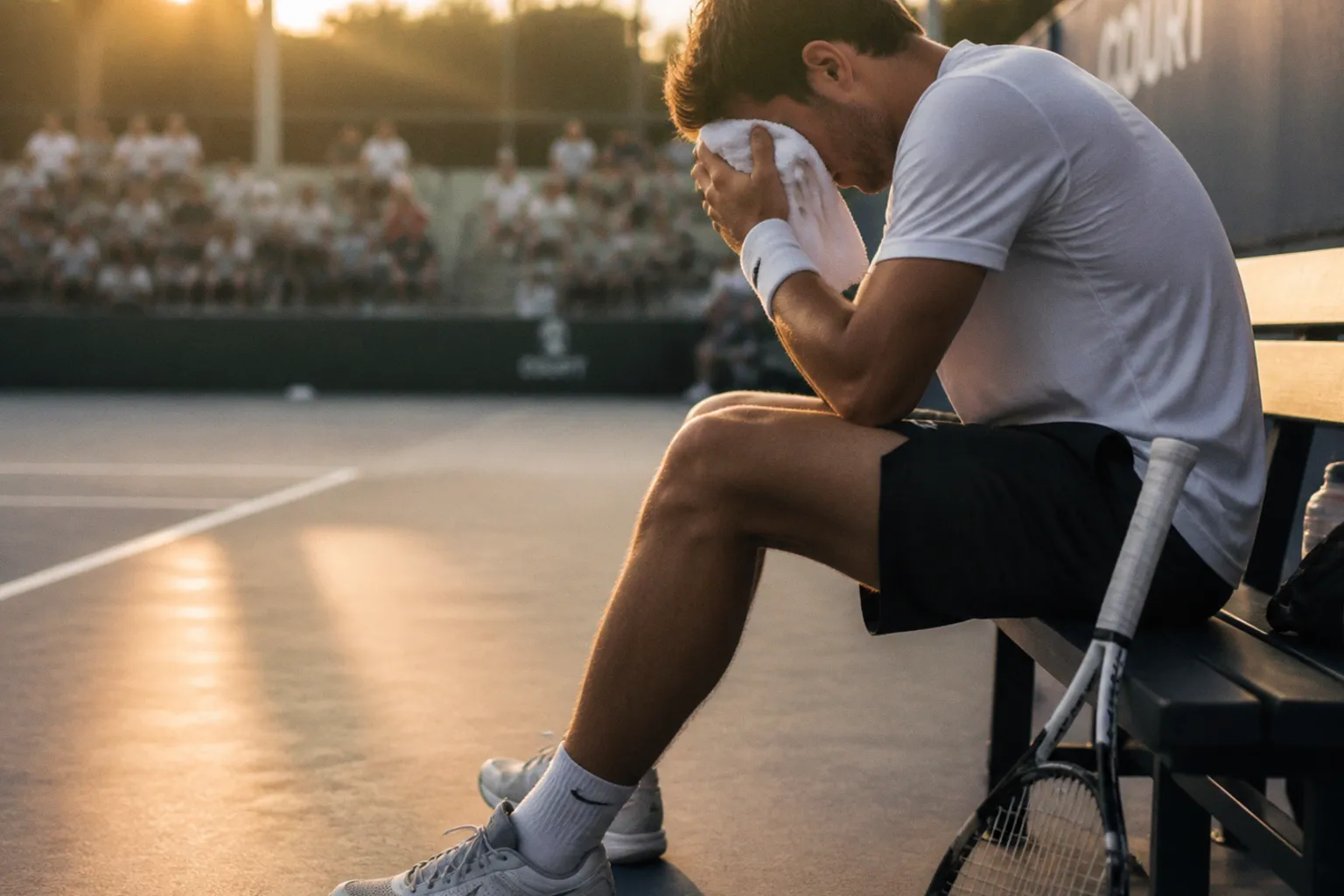
The Science Behind the Shaky Hands
Researchers at Zhengzhou Normal University surveyed 711 Chinese university student-athletes and confirmed what every coach already suspects but few will admit on the record: participation motivation is negatively linked to competitive anxiety, and psychological resilience is the mechanism doing the heavy lifting. Sport commitment moderates the whole equation. The sample isn't the ATP or WTA — it's students juggling coursework and competition. But the architecture of the finding travels. The pro tour just runs the same experiment at higher velocity.
Tracy Austin's Quiet Diagnosis from Cincinnati
Hall of Famer Tracy Austin, speaking with CincinnatiOpen.com, cut through the noise around the current youth movement with a sharp observation about what separates the ones who survive from the ones who crack. She noted that phenoms "break in young" because "certain things are important in tennis: it's the mind, coping with your emotions. It's weapons, it's your movement, your ability to adapt in a match." That list isn't ranked by accident. Austin put the mind first.
Watch Iva Jovic — 18, composed, playing like she's been on tour for a decade — and you're watching the resilience variable in action. Austin praised her "poise" and pointed to the family foundation: pharmacists for parents, a sister at UCLA. "You can tell when people have a good family around them," she said. That's the sport-commitment moderator showing up in human form. Sara Bejlek, 20, took out the world No. 1 at the same event. The youth wave isn't a marketing slogan; it's a measurable shift in how quickly the next generation processes competitive pressure.
Then look at the other end. Venus Williams at 46 and Serena at 44 still packing the Grandstand for doubles. Austin didn't romanticize it. She reframed it bluntly: "It's an obsession, tennis. 'Obsession' is a negative word. It's joy. They just really love to play." That's the participation-motivation variable running hot decades after the trophy case filled up.
What to Watch For on Court
The Djokovic retirement chatter — touched on by The Tennis Gazette and streamlinefeed.co.ke in connection with a new Amazon documentary — slots neatly into this framework. A champion still competing at the highest level isn't fighting anxiety; he's the outlier whose motivation and commitment have somehow refused to deplete. Everyone else on tour is negotiating with resource loss, the same mechanism the Frontiers authors trace from single bouts of competitive anxiety into burnout if recovery doesn't come.
For the viewer: start paying attention to the small tells. A player bouncing on their toes between points but staring at the strings instead of the opponent. A coaching visit that runs thirty seconds too long because the player won't stop talking. The serve that suddenly lands two feet short on a game point. These are the cognitive-load symptoms the model describes at professional level — attention splintering, concern about outcome overriding execution. The resilient ones reset. The anxious ones unravel. The committed ones just keep showing up, because the game is, at the end of the day, striking a ball over the net again and again.