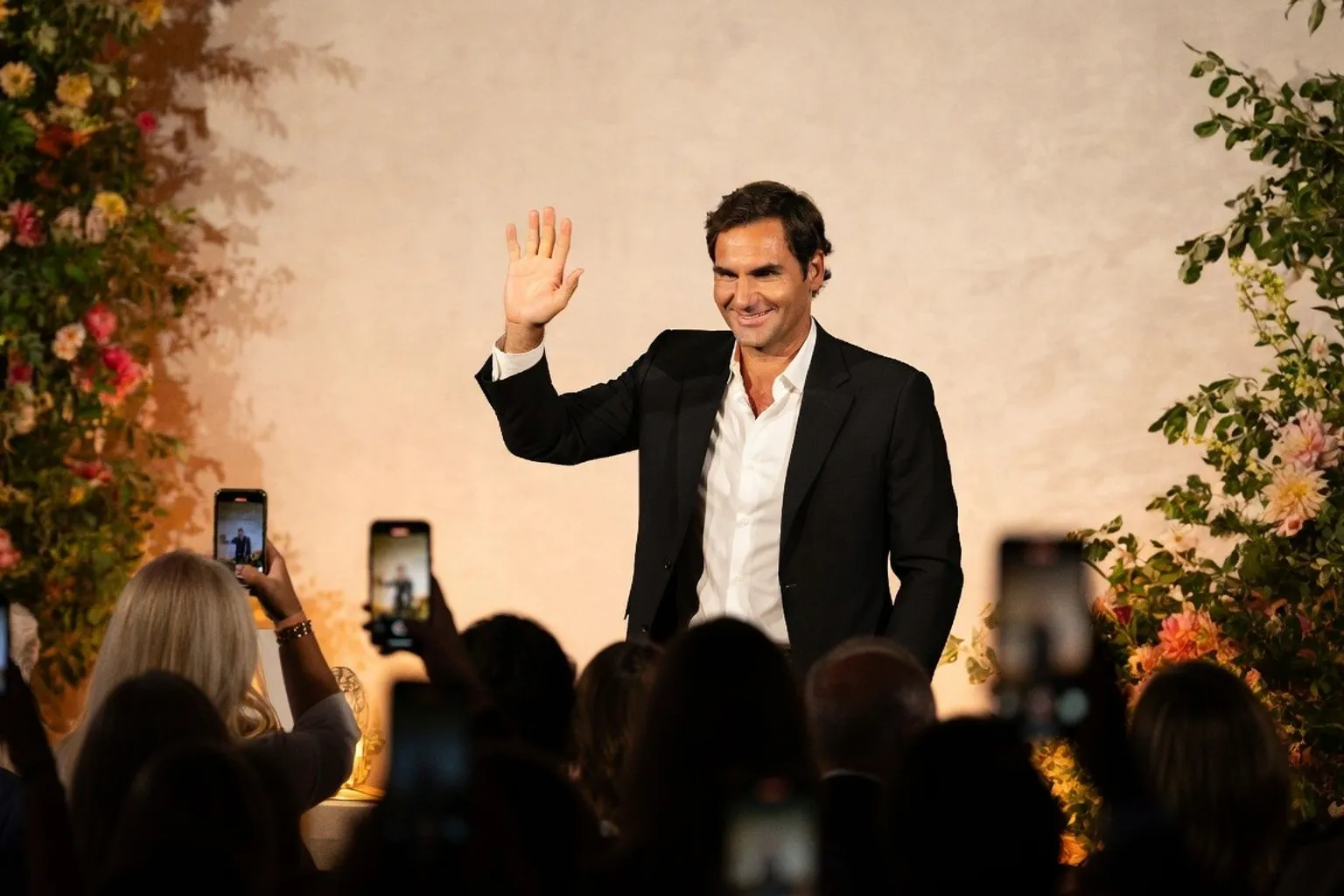
There was something almost disarming about watching Roger Federer sit behind a microphone in Newport, patting himself on the back in the most Federer way possible — gracefully, modestly, with that practiced humility that doubles as its own kind of armour. The 45-year-old Swiss is set to be inducted into the International Tennis Hall of Fame on Saturday alongside journalist Mary Carillo, and according to RNZ's coverage of his Friday press conference, the message was unmistakable: the trophies were never really the point.
The storm he learned to weather
Federer didn't flinch when asked about pressure. He leaned into it. At the session moderated by Hall of Fame president Patrick McEnroe, he admitted to preferring Centre Court to Court Five or Court 18, to wanting "to be that person." But the more revealing moment came when he described the cognitive texture of elite sport — the relentless outside noise that grinds players down regardless of results. "You get affected by so many outside comments that it's like one big storm sometimes in your brain," he said. "Sometimes you lose the fun in it." The admission lands differently coming from a man who spent 310 weeks at world No. 1 and walked away with 103 ATP titles. It suggests not invulnerability but a long, conscious project of staying intact — and, crucially, of staying happy on the road. The psychological takeaway for any young pro watching: survival at the top is mostly a question of which voices you let through the door.
The legacy that isn't silverware
This is where Federer performed the most interesting bit of stagecraft of the week. Yes, the résumé is absurd on its face — 20 Grand Slams, the career Grand Slam completed at Roland Garros in 2009, Olympic doubles gold with Stan Wawrinka in Beijing 2008, the 2014 Davis Cup, eight Wimbledon titles, six Australian Opens, five US Opens. But what he wanted to talk about, repeatedly and pointedly, was governance. The player council. The conversations with ATP leadership and the Slams. The push for prize money that actually reaches first- and second-round losers, and improved conditions for physios, media and lower-ranked players. "Prize money is so much higher than it ever was when I started," he noted. "We have made huge strides not just for winners." The cynical reading: every legend eventually rewrites their legacy to include collective work they only partly shaped. The more generous one: Federer genuinely spent political capital on shared gains during years when he had absolutely no need to. Either way, the rebrand was deliberate, and worth noting for what it says about how icons are packaged in real time.
The "big maybe" tour
The coaching question produced the most revealing slip of the week. When Mats Wilander publicly floated Federer's name as a possible replacement for Juan Carlos Ferrero with Carlos Alcaraz, Federer shut it down — but with a qualifier that said more than the denial. He cited Stefan Edberg, who swore he'd never coach and then spent two seasons inside Federer's own box. Full-time touring coaching, he argued, demands "20 to 25 weeks on the road" plus emotional standby duty through every Slam collapse. His verdict: "That's a big commitment — so let's be honest, it's a big maybe." The Laver Cup captaincy remains a firmer possibility, and he mentioned attending three to five events a year just to stay plugged in. Don't expect him parked on a player's box full-time anytime soon. The kids, the wife, the projects — the reasons sounded real, which is what made them interesting. A man who spent two decades perfecting the illusion of effortlessness is now carefully calibrating how much of himself the sport gets next.
One footnote worth tracking: Rafael Nadal and Novak Djokovic will follow him into Newport soon enough. The Big Three, reunited in a hallway rather than across a net. That, when it happens, will be its own psychological document.