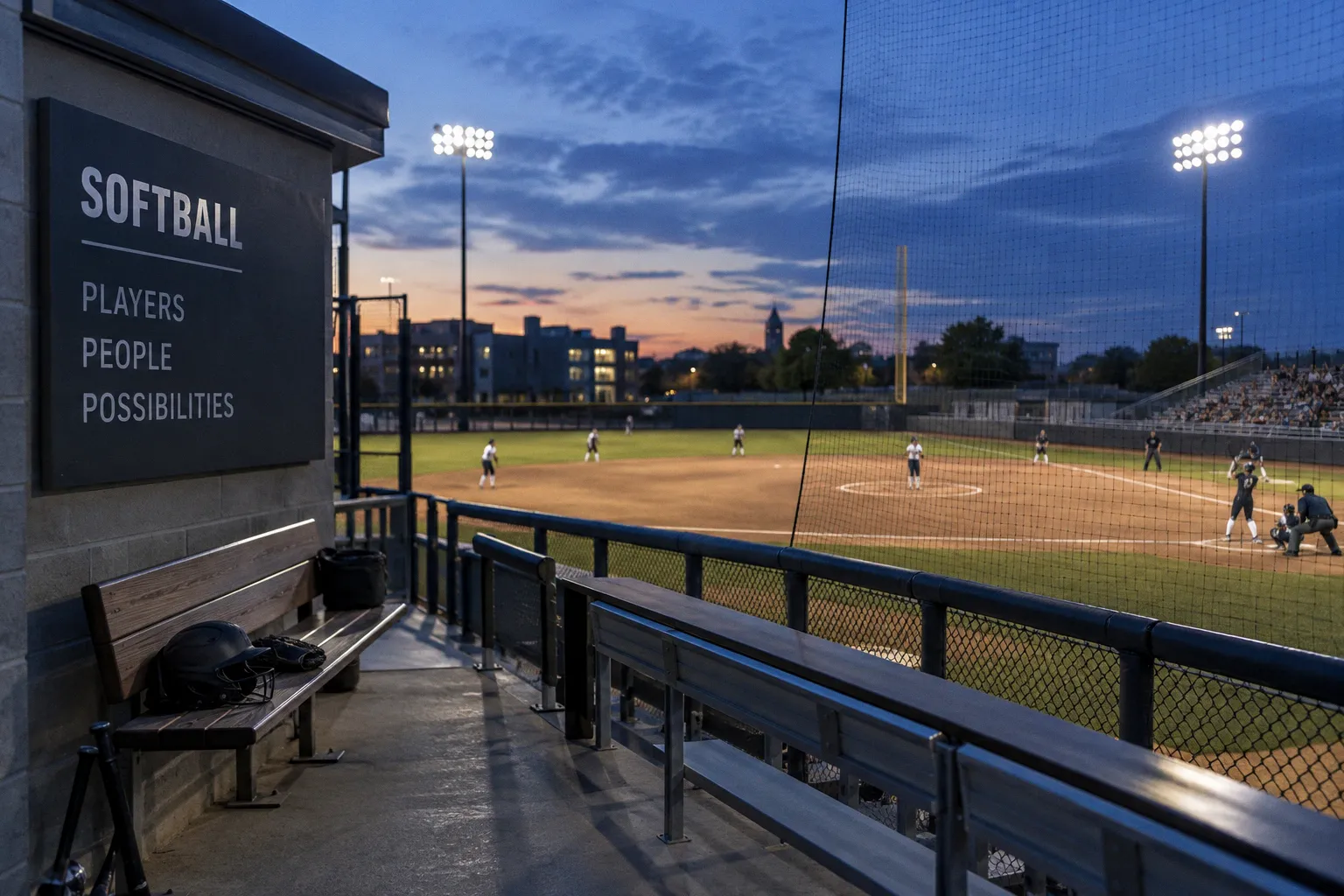
Sports Illustrated walks through a pattern that has become impossible to ignore: three college softball programs — UAB, Gardner-Webb, and Cal — each drawn into allegations involving inappropriate relationships between female coaches and female student-athletes over the past three months. Three coaching changes. Three different sets of facts. One structural problem staring back at the sport, daring someone in a press conference to call it what it is.
The pipeline nobody will defend out loud
The mechanism is simple, and nobody in the sport wants to put it on the record. As the SI piece frames it, most AUSL players end up coaching softball full-time — graduate assistant, assistant, head coach. The gap between competing and leading has effectively collapsed. No buffer year of being a professional. No stretch as an employee rather than a player. The athlete-to-coach handoff happens before the athlete has spent any real time as a person who answers to someone else, instead of one who only ever gives the answers.
What does that produce? A coaching class that has rarely been managed by anyone outside the same compressed system. Universities hire from this pipeline. They lean on recommendations from this pipeline. The vetting apparatus is built by the very people the rush produces. And when the references all come from the same factory, the same failures tend to roll out the same door.
What pro softball is supposed to buy — and what it won't
The argument inside the SI piece is straightforward: if AUSL or the Professional Softball League actually works, players get time. Time outside the college athletics bubble. Time to earn a paycheck and navigate a workplace. Time to receive leadership from a different vantage point before deciding to give it. Most of all, time to mature into the question of whether coaching is genuinely a calling — or simply the default exit ramp from a playing career that ended one season too early.
The piece also raises the questions institutions prefer to dodge. Who actually checks the references. Whether coaches are truthful in their own recommendations. Whether universities hire the best applicant regardless of gender, or simply the most credentialed candidate from the most compressed pipeline available. The gender of the coach shouldn't decide how seriously the power imbalance gets taken — and it shouldn't decide whether anyone bothers doing the structural work to prevent the next case either.
A mirror the tennis world keeps avoiding
This story drops while tennis is busy relitigating its own press-conference culture — the Williams sisters' US Open saga, Djokovic refusing to skip media, Alexandra Eala's strange Q&A, the Fritz and Keys exit-press blowback. The connective tissue isn't hidden. Athletes move into authority roles with the same velocity in both sports. The pauses never get built into the schedule. The accountability gaps compound quietly. And the press table becomes the venue where the unfinished emotional business of a compressed pipeline finally surfaces in public.
The sport that figures out how to slow the handoff wins the next decade. The ones that keep treating this as a personnel problem keep filing the same story.