It demanded an immediate answer, then punished anyone still composing one.
This was the central cruelty of carpet tennis. It was not merely fast. It compressed decision-making. The server gained more from a modest advantage, the returner had less time to improvise, and a player who lost the first exchange could find himself outside the point before his tactics had even appeared. For decades, this made indoor tournaments feel like a separate species of professional tennis. Then the ATP decided that the species had become inconvenient.
The ATP Tour discontinued carpet courts in top-tier men’s competitions from 2009. The official reasoning was familiar: reduce injury risks, improve consistency, and slow indoor conditions enough to encourage longer rallies. In other words, professional tennis looked at its fastest surface and decided that it was producing too much of the wrong kind of truth.
The velocity era: what carpet actually was
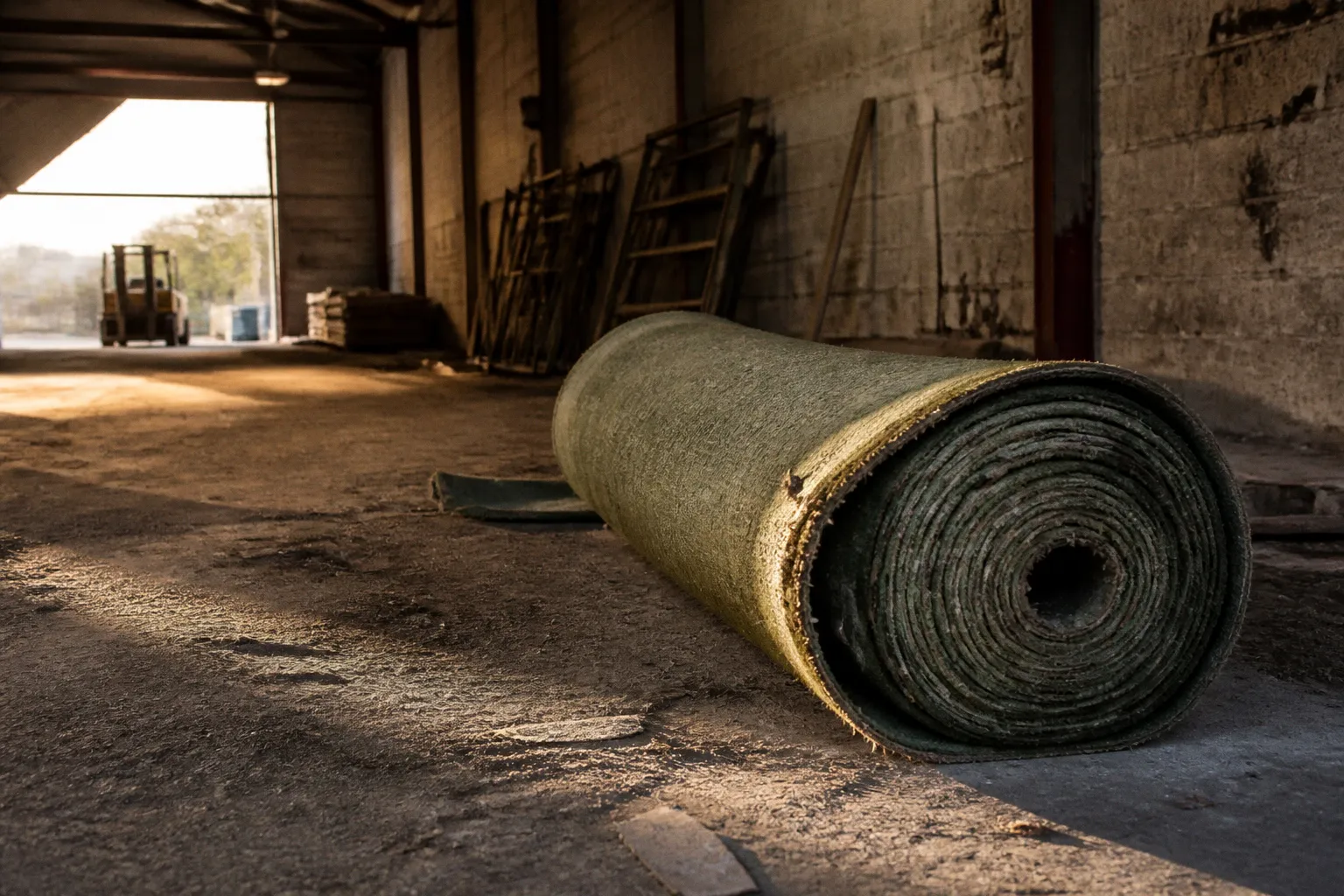
The word “carpet” makes the surface sound softer and more forgiving than it was. In professional tennis, carpet referred to a finished textile or polymeric material supplied in rolls or sheets and laid over a hard foundation such as concrete or asphalt. Some courts used indoor textile or rubber-like mats. Another historical form appeared outdoors as artificial turf with sand infill.
The distinction mattered, but not in the way a marketing department might have preferred. Carpet was not one perfectly standardized substance with a single predictable response. Its speed, grip, bounce and skid could vary according to the material, installation and maintenance. The court was a surface, yes, but also a set of local conditions. Players had to learn the particular personality of each venue quickly.
That was part of its appeal. It also happened to be part of the problem.
Carpet was historically among the fastest tennis court surfaces, alongside grass. The ball tended to stay low and move through the court rapidly. There was little time for the receiver to retreat into a comfortable baseline pattern, and even less time to make a tactical speech to himself about patience. A first serve followed by a short ball could settle the point almost immediately.
The strategic hierarchy was blunt:
- The first strike mattered disproportionately. A strong serve or aggressive return could create a decisive advantage before either player had established a rhythm.
- Compact technique was rewarded. Large preparation loops and elaborate footwork were luxuries. The ball arrived with the manners of an accusation.
- Low contact points changed the geometry. Players had to bend, shorten and redirect rather than wait for a convenient shoulder-height ball.
- Serve-volley tennis remained structurally viable. The server could move forward behind a good delivery without offering the returner the extra time available on slower surfaces.
- Defensive recovery was expensive. A player who was late to the first ball often had no second chance to reset.
This does not mean carpet produced random tennis. That is the lazy version of the story, usually told by people who confuse speed with chaos. Fast tennis can be highly technical. It asks different questions. Can the player disguise the return direction while making contact early? Can he absorb pace without floating the ball? Can he keep the serve pattern unpredictable when the opponent has only a few instants to respond?
Carpet exposed answers quickly. It was not interested in a player’s reputation.
Carpet did not eliminate tactics. It eliminated the luxury of revealing them slowly.
Why the indoor game became politically uncomfortable
The modern professional tour prefers surfaces that can be described, compared and packaged. A tournament wants its court speed to be part of a controlled identity, but it also wants that identity to sit comfortably inside a global competitive system. Carpet made both ambitions awkward.
The ATP’s 2009 decision to remove carpet from top-tier men’s events was not simply a decree against fast tennis. It was an attempt to standardize indoor competition. If two tournaments both called themselves hard-court events, the governing logic increasingly demanded that their conditions be legible within the same broad category. Carpet resisted that neatness.
Its variability was not an abstract technical complaint. A roll-laid surface could behave differently from one venue to another. The relationship between the material and the foundation affected the way the ball moved and the way players moved after it. A court could be quick, low-bouncing and unforgiving without offering the same footing or response as the next carpet tournament on the calendar.
That inconsistency created a peculiar burden. Players were not only adapting to an opponent; they were adapting to the court’s own refusal to be fully standardized. The margins were already narrow. If the surface added another layer of uncertainty, the tournament became harder to regulate and harder to explain.
Professional tennis, naturally, did not say it wanted every match to feel the same. It said it wanted a more coherent competitive environment. The distinction is important, and rather revealing.
A uniform product is easier to govern than a volatile one. It is easier to schedule, easier to sell to broadcasters, easier to evaluate through rankings and statistics. Carpet belonged to an older version of the tour, when tournaments could have stronger local identities and a player might arrive knowing that the week would demand an entirely different operating system.
The ban therefore marked a shift in philosophy. The surface was no longer being judged only by whether it produced compelling tennis. It was being judged by whether it fit the emerging architecture of the sport.
The physical toll beneath the spectacle
The arguments against carpet were not purely administrative. Injury risk was among the main reasons cited for phasing it out, along with court inconsistency and the desire to lengthen rallies.
The physical concern begins with movement rather than impact. Tennis players do not simply run on a court; they brake, pivot, push off and recover repeatedly. A surface that changes how the shoe grips can alter the timing of every one of those actions. On carpet, the player’s body may be ready to decelerate while the feet are still negotiating the material beneath them. That disagreement is where strain enters the conversation.
The cited risks included joint strain and skin abrasions. Those details sound mundane until placed beside the repetitive demands of a professional schedule. One awkward slide is an incident. The cumulative effect of altered traction across a tournament calendar is a management problem.
Carpet could also make the physical consequences of defensive movement more visible. A player reaching for a ball on a slower court may have time to absorb the mistake and recover. On carpet, the same late movement could become a skid, a collapse of balance or a desperate stretch that ends the point and irritates the body. The surface did not merely reward aggression; it increased the cost of being late.
That is why the argument about speed should not be reduced to entertainment. The fastest surface may produce the cleanest winners and the sharpest tactical exchanges, but it can also reduce the number of corrective steps available to a player. When the ball stays low and the bounce comes quickly, the body has less time to make small adjustments. Tennis players live on those small adjustments.
A slower court is not automatically a safer court. Nor was carpet a universal injury machine. The available record does not justify a precise claim about how much more often players were injured on carpet than on modern hard courts. What can be said is narrower and more credible: injury concerns were part of the official rationale for moving away from the surface, particularly in combination with inconsistent playing conditions.
The tour did not need carpet to be uniquely dangerous. It only needed the surface to be difficult enough to defend in an era increasingly attentive to player welfare and event standardization.
The psychology of a point that ends too soon
Carpet altered not only the body but the emotional rhythm of a match. On a slower surface, a player can lose a point and still feel that the structure of the game remains intact. There will be another exchange. Another chance to work the opponent’s backhand. Another opportunity to turn pressure into attrition.
Carpet made that reassurance less reliable.
A single loose return could become a hold of serve. A hesitant second shot could be converted before the returner had time to recover. The cognitive load was severe because each decision carried unusual weight, and the player knew it. That knowledge has a way of entering the body. The toss becomes a little more guarded. The return stance becomes rigid. The swing that was meant to be compact becomes merely frightened.
This is where the mythology of fast indoor tennis often becomes too romantic. The old surface is remembered as a place of pure attacking courage, where players served, volleyed and refused to apologize. There was certainly skill in that style. There was also a great deal of pressure disguised as efficiency.
When points are short, the scoreboard can flatter composure. A player may appear clinically dominant while actually operating under an extremely narrow margin. The first tie-break, the first poor service game, the first sequence of missed returns — these moments carry more psychological weight because there are fewer extended rallies to dilute them.
The opponent feels the same pressure, of course. That is the strategic beauty of the surface. Carpet could produce a form of mutual suffocation. Each player knew that a small mechanical lapse might become a break. Each player tried to attack first while avoiding the appearance of panic. The facade of control was thin.
A player who fell behind on carpet could not always respond by increasing effort. That is the trap. More force does not create more time. It can produce a rushed return, an overhit approach or an ugly service motion. The better response was often technical restraint: shorten the swing, take the ball early, accept that the point might be decided by one clean contact.
But restraint is difficult when the surface has already made the match feel like an emergency.
Surface speed and mental consequence
| Feature of carpet | Tactical effect | Psychological pressure |
|---|---|---|
| Low, rapid bounce | Forces early contact and compact preparation | Makes hesitation immediately visible |
| Strong reward for first-strike tennis | Gives serve and return greater influence | Turns small errors into exaggerated setbacks |
| Limited recovery time | Reduces the chance to reset after a poor position | Increases cognitive load during every exchange |
| Variation between installations | Requires rapid adaptation to local conditions | Undermines the player’s sense of certainty |
| Fast indoor rhythm | Shortens many points and service games | Leaves fewer opportunities to regain emotional control |
The surface therefore produced a particular kind of unraveling. It was rarely theatrical at first. A player did not necessarily smash a racket or collapse into visible despair. He began by arriving late to one return. Then he stood too far back. Then he tried to compensate with a bigger swing. The match moved on without waiting for the explanation.
From Paris to the final WTA carpet
Carpet was not a minor historical curiosity. It occupied a significant place in the tournament landscape, especially indoors. The Paris Masters was played on carpet intermittently between 1968 and 2006. The WCT Finals, Kremlin Cup, Zagreb Indoors and U.S. Pro Indoor were among the other major events associated with the surface.
Those tournaments gave carpet a recognizable cultural role. Indoor tennis was not simply outdoor tennis moved beneath a roof. It had its own tempo, its own visual language and its own hierarchy of skills. A player could be a formidable competitor across the season and still arrive at a carpet event looking tactically underdressed.
That distinction is now difficult to recover from the modern schedule. Contemporary fans are accustomed to discussing hard courts as if they were a broad but coherent family, with speed differences and bounce variations contained inside an accepted framework. Carpet was more disruptive. It invited players to build a specialized relationship with a surface that the tour eventually decided not to preserve.
The men’s tour moved first and most decisively. The ATP’s discontinuation of carpet from top-tier competitions began in 2009, closing a chapter that had already been shrinking. Richard Gasquet’s title in Lyon in 2006 and Andy Murray’s victory in St. Petersburg in 2007 are often counted among the final ATP titles won on carpet by active players. They belong to the end of the era rather than its peak: the last flickers of a format that had already lost institutional confidence.
The women’s tour carried the surface a little longer. The last WTA Tour event played on carpet was the Tournoi de Québec, also known as the Québec Open, in Canada in 2018. That date gives the story an odd afterlife. Carpet had vanished from the top tier of men’s tennis nearly a decade earlier, yet it remained present in the women’s calendar until the late 2010s.
This uneven disappearance is part of the surface’s lore. It did not die everywhere at once. It receded through scheduling decisions, venue changes and a gradual narrowing of what elite tennis considered acceptable. There was no single cinematic farewell, no official funeral for the court. The material simply became less useful to the institutions managing the sport.
And institutions are very good at making disappearance look like housekeeping.
What the ban changed in the language of tennis
The removal of carpet helped reinforce a new professional vocabulary. Tennis increasingly emphasized longer rallies, physical endurance and the ability to construct points over several phases. The preferred match was not necessarily slow, but it was expected to contain more visible development.
This was not only a sporting adjustment. It was a storytelling adjustment.
Longer rallies provide more information. They reveal patterns, preferences and stress points. A viewer can watch a player defend the backhand corner, change height, move the opponent and finally create an opening. The match becomes legible as a sequence of choices. Carpet often refused that narrative structure. It could deliver a serve, a return and a sudden conclusion before the tactical plot had time to establish itself.
For analysts, that meant less material. For broadcasters, perhaps less drama that could be stretched across commentary. For governing bodies, fewer questions about why one indoor event played at a radically different speed from another. The standardization of court conditions aligned with the larger desire to make professional tennis easier to compare across tournaments.
But something was lost in the process. A surface should not be judged solely by how well it supports statistical continuity. Tennis has always depended on environmental difference. Grass changes the shape of a point. Clay changes the value of patience. Hard courts sit between categories but still express local character. Carpet offered an especially severe version of indoor tennis, one in which anticipation and nerve could matter more than physical accumulation.
Its disappearance narrowed the dialect of the sport.
The carpet ban made tennis easier to standardize, but not necessarily richer to remember.
That is the uncomfortable distinction. Standardization can improve fairness, reduce uncertainty and address legitimate physical concerns. It can also flatten the eccentricities that make a sport historically interesting. The fact that carpet was difficult to regulate does not mean it was artistically disposable.
The surface modern tennis chose not to become
The case against carpet was persuasive enough for the ATP: potential injury concerns, inconsistent conditions and a preference for rallies that lasted longer than a few violent exchanges. The decision also reflected the changing image of the elite player. Modern tennis asks athletes to survive a long season across surfaces, formats and physical demands. A specialized court that magnified early striking and rewarded a narrow technical profile no longer fit comfortably into that model.
Yet the surface remains revealing precisely because it was rejected. Carpet exposes what tennis values when it chooses not to value carpet.
The modern game prefers recoverability. It wants a player who can be tested, stretched and given an opportunity to solve a problem over time. Carpet was less forgiving of the problem-solving process. It made the first answer disproportionately important. The player who read the serve correctly, held his nerve on the return and moved forward with conviction could appear brilliant. The player who needed an extra beat looked unprepared.
There is no moral superiority in either style. The long rally is not inherently more intelligent than the quick exchange. A twelve-shot construction can contain routine patterns; a three-ball point can require extraordinary anticipation. The difference is that longer rallies display their logic more generously. Carpet kept its logic compressed.
That compression created a distinctive form of match psychology. Players had to manage not only their opponent’s weapons but the temptation to overreact to every lost point. A break could feel terminal even when the mathematics said otherwise. A missed return could trigger a chain of compensations. The player began trying to defeat the surface, the scoreboard and his own cognitive load at once.
Eventually, the tour decided that this was not a desirable central experience for indoor tennis.
Lower-level events and local clubs may still use synthetic turf or textile surfaces. The top-tier ATP ban should not be mistaken for a global prohibition on every form of carpet tennis. What disappeared was carpet as a regular feature of the highest professional competitions, not the material from every court in the world.
That distinction matters because tennis history is full of surfaces that survive below the official spotlight. A court can vanish from the main tour and remain present in memory, club culture and the technical habits of players who learned the game on something faster, stranger and less forgiving.
The afterimage of carpet
Carpet courts are remembered as fast, but speed alone does not explain their disappearance. The real issue was friction — between standardization and local character, between player welfare and spectacle, between the demands of a long season and the appeal of a specialized tactical environment.
The ATP did not abandon carpet because the surface lacked drama. It abandoned carpet because the drama came with costs the modern tour no longer wanted to carry. The injury concerns were difficult to quantify across every historical season, but they were serious enough to become part of the policy argument. The inconsistent conditions made the surface harder to integrate. The short points and extreme speed cut against the institutional preference for longer exchanges.
In the end, carpet became a casualty of professional tennis becoming more uniform, more managed and more conscious of its own physical economics.
That is why its legacy is more interesting than the ban itself. Carpet represented a version of the sport in which the court could impose a sharper identity on the player. It rewarded immediate reading, technical economy and emotional discipline. It exposed hesitation without ceremony. It made the difference between being ready and merely being present brutally clear.
Modern tennis may be better organized without it. It is probably easier to compare, easier to govern and, in many respects, easier on the body. But the game is also less strange. There are fewer tournaments where the surface can seize control of the tactical conversation and force two elite players into a compressed argument about time.
Carpet lost that argument with the institutions. It did not lose because it was irrelevant. It lost because it was too revealing of the sport’s underlying tensions — and because professional tennis eventually preferred a court that gave everyone more time to maintain the facade.