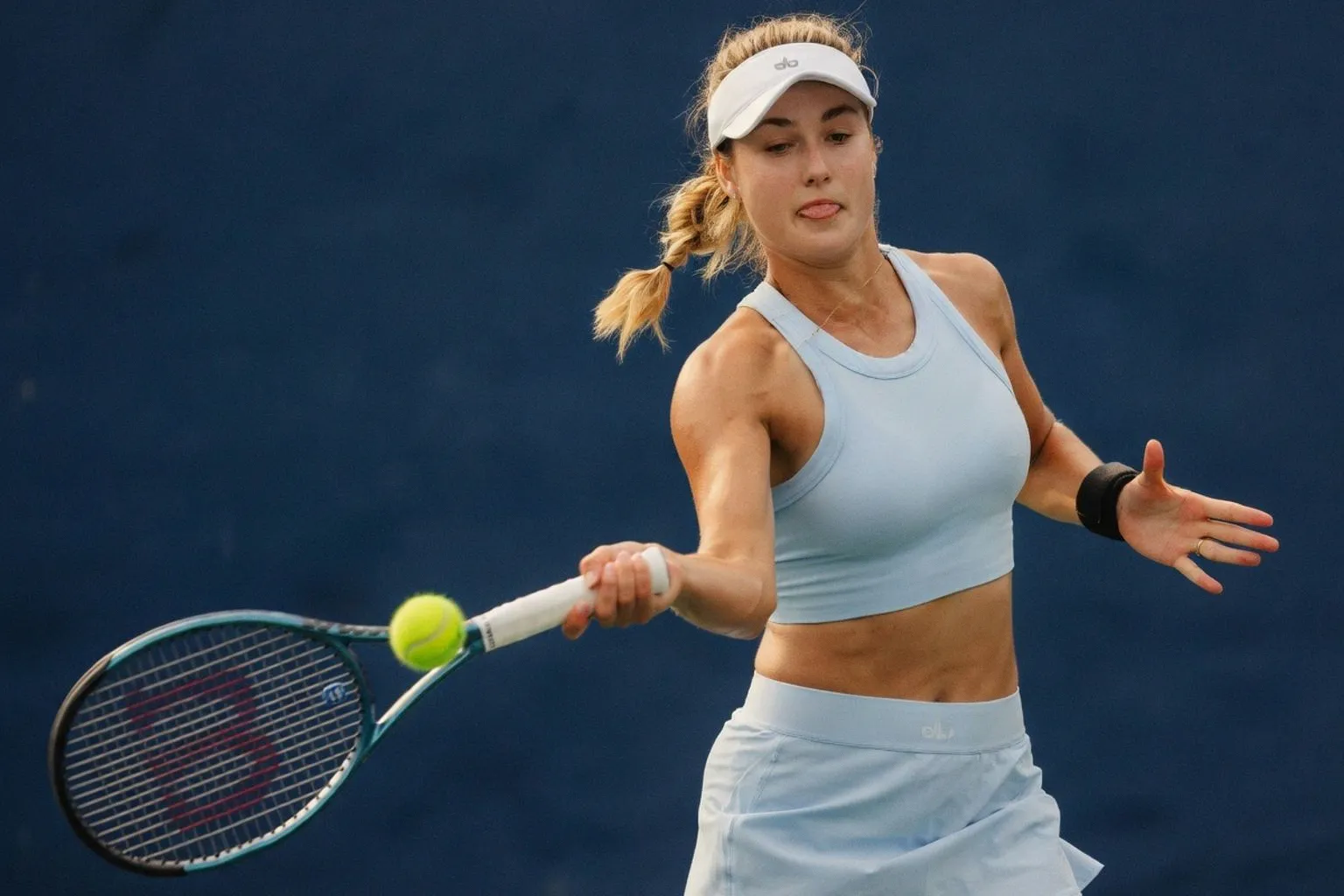
The Timing That Speaks Volumes
When Anna Kalinskaya retired down 0-5 in the third set against Sorana Cirstea in Cincinnati — after a medical timeout for her lower back and hip — the prominent tennis insider fired off a post on X that cut straight through the usual courtesy: Kalinskaya, he suggested, simply didn't want her good friend Cirstea to bagel her. The implication was surgical. Not injury. Not precaution. Preservation of ego.
It's the kind of observation that makes Morgado both indispensable and polarizing. Two years ago, his mockery of Andrey Rublev's mental health revelation fractured his credibility with a chunk of the fanbase. But here, the timing of his jab lands on genuinely fertile ground for scrutiny.
A Collapse Wrapped in a Retirement
The scoreboard tells a story of attrition. Kalinskaya took the opening set tiebreak 7-4 — a legitimate foothold against a veteran opponent. Then the facade crumbled. Cirstea broke her serve seven times across the match and reeled off eleven of the last twelve games. By the time Kalinskaya called for the trainer, the cognitive load of watching a commanding position dissolve into a rout was already written across her body language.
This was her second retirement of the season. The first came in Berlin against Elina Svitolina while trailing 6-1, 4-1 — a near-identical pattern of capitulation followed by withdrawal. The question isn't whether the injuries are real. Medical timeouts exist for a reason. The question is what the pattern reveals about a player's capacity to endure the psychological weight of a match unraveling in real time.
The Hard-Court Grind Exposes Deeper Issues
Kalinskaya's 2026 numbers paint a portrait of stagnation masquerading as competence. A 23-16 win-loss record looks respectable until you notice the absence of a single title. Her best result — a quarterfinal at Roland Garros — feels increasingly like an outlier rather than a launchpad. On hard courts, she's managed just five wins across three tournaments, with early exits in Washington, Toronto, and now Cincinnati.
Ranked No. 21, she sits in that uncomfortable no-man's-land: too high to be overlooked, too inconsistent to be feared. The US Open looms on August 30, and there's little in her recent trajectory to suggest a deep run. What Morgado's quip really exposes isn't one retirement — it's the accumulating evidence of a player whose physical resilience and mental fortitude are both under question at exactly the wrong time of year.