Rybakina stopped while trailing 1–4 in the first set, ending the match and removing her immediate route to the WTA No. 1 ranking. For the tournament, the incident changes the draw; for the US Open, the relevant variable is now Rybakina’s recovery timeline, which has not been established in the available reports.
The match ended at 1–4
Rybakina appeared to sustain a left ankle injury while behind 1–4. A brief medical assessment followed, after which the Kazakh player retired. Swiatek received a walkover into the semifinals.
The sequence matters because the retirement was not recorded as a completed competitive loss. There is no valid match sample from which to assess Rybakina’s serve, return position, rally tolerance, or movement efficiency on the Cincinnati court. Any tactical conclusion about the quarterfinal would therefore be invalid.
The only confirmed competitive data point is the score at the interruption: Swiatek led 4–1 in the opening set. The injury, rather than a completed exchange pattern over a full match, determined the result.
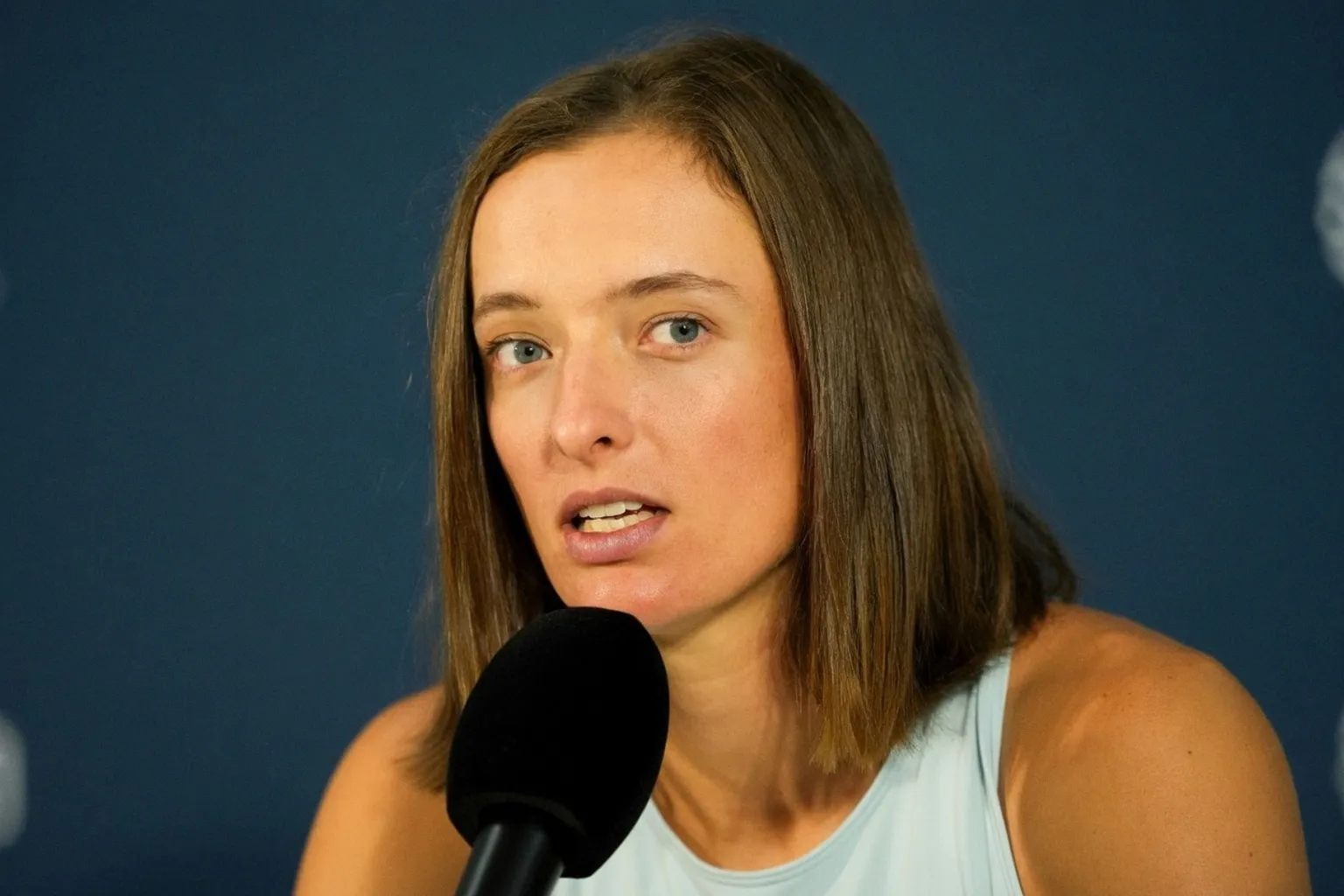
Swiatek later addressed the situation in her on-court interview and press conference. Reports describe her as initially scared by what she saw and then sorry for Rybakina. That reaction is relevant less as a rivalry narrative than as an indication of how quickly a high-level match can become secondary to a player’s physical condition.
The ranking calculation stopped with the withdrawal
Rybakina entered Cincinnati with a route to the top of the rankings. Aryna Sabalenka had already exited in the fourth round, and Rybakina needed to reach the final to replace her as World No. 1. The retirement ended that possibility for this tournament.
That is a narrow but important distinction. The result did not establish a new ranking order. It only removed Rybakina’s remaining opportunity in Cincinnati. The available material does not confirm any further ranking movement or provide a medical diagnosis.
The episode also illustrates the limits of tournament arithmetic. A player can have the necessary path on paper and still lose access to it through one physical interruption. The ranking scenario was mathematical; its execution depended on completing the next two matches.
Swiatek’s next tactical problem is Pegula
Swiatek’s title defence continues against Jessica Pegula in the semifinals. Pegula is the current No. 3, and the match will be played with the Cincinnati crowd expected to support the American. Swiatek leads their head-to-head 7–5. Their most recent meeting, in the quarterfinals of this year’s Italian Open, ended in a 6–1, 6–2 win for Swiatek.
Those figures provide context, not a forecast. The Italian Open score establishes a previous tactical advantage, but it does not transfer the same court conditions, crowd pressure, or physical state to Cincinnati.
For Rybakina, the immediate item to monitor is not the abandoned ranking chase but confirmed information on her injury and recovery. The available reports establish a left ankle issue and a mid-match retirement. They do not establish its severity, expected absence, or effect on the US Open.
The conclusion is limited. Swiatek advanced without completing the quarterfinal, while Rybakina’s No. 1 opportunity ended with the withdrawal. No reliable performance projection follows until her medical status and return to competition are known.