A Nation's Weight on One Racket
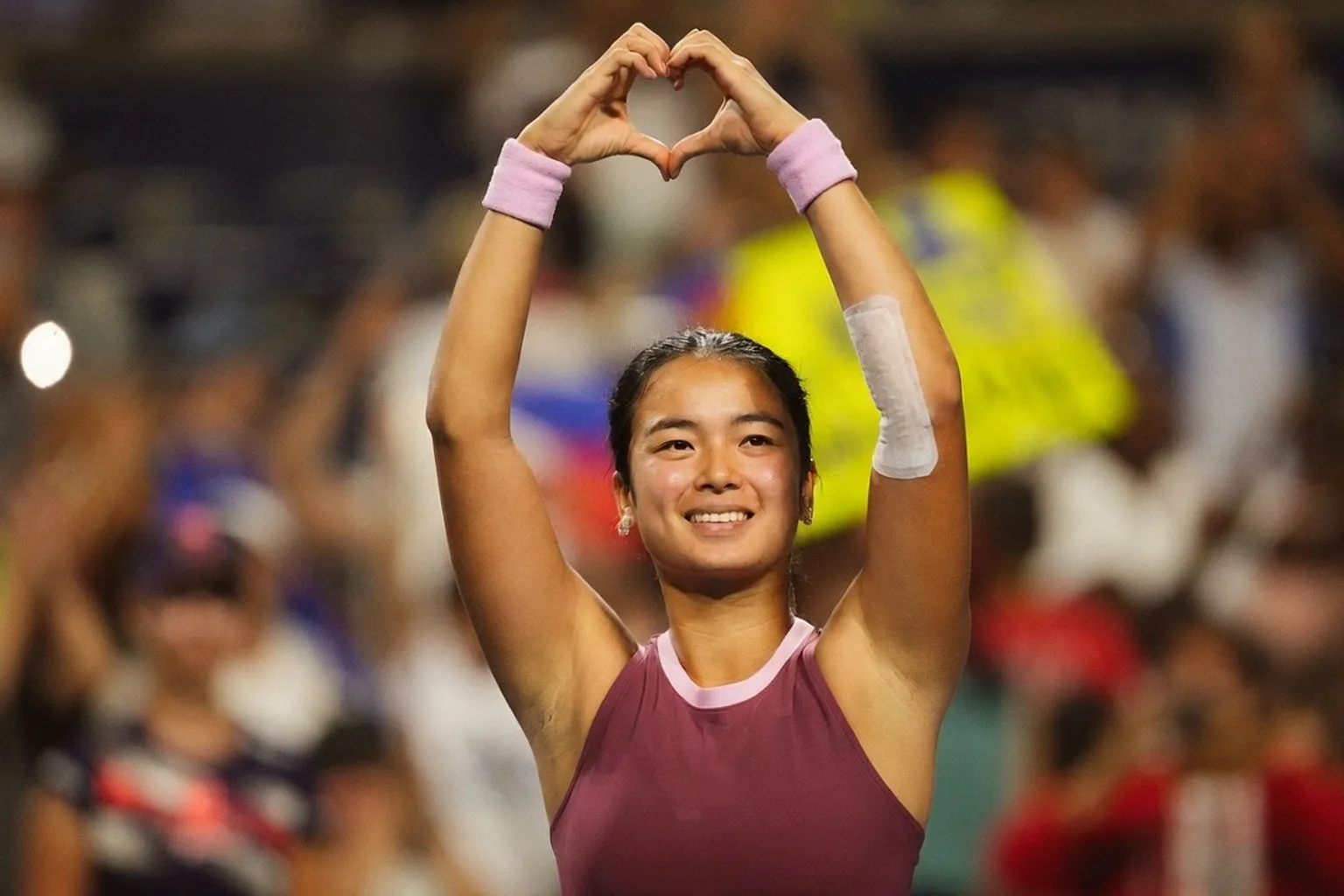
According to a recent Vogue profile, the scene at this month's Canadian Open in Toronto didn't look like a tennis tournament — Philippine flags draped the stands, fans shouted encouragement in both English and Tagalog, and a local vendor scrambled chicken adobo and lumpia onto the concession menu. Cute cultural color, sure. But for anyone who has watched what happens when an entire nation latches onto a single athlete, the optics carry considerably more weight than a food-court novelty act.
Twenty-one-year-old Alex Eala, ranked 18th in the world, has become the unlikely vessel for a country's tennis awakening. Her night sessions drew sold-out crowds of more than 10,000, including a high-profile doubles appearance alongside Venus Williams. The phenomenon traces back to her 2022 US Open girls' singles title — which made her the Philippines' first Grand Slam champion — and intensified after her semifinal run at last year's Miami Open, where she stunned three Grand Slam champions along the way.
The Psychology of Being Everyone's Breakthrough
Eala has been admirably candid about the cognitive dissonance of sudden national worship. As she told Vogue over coffee after a late-night Toronto win, "At first, it took me quite aback because I couldn't understand how [Filipinos] could feel so deeply or so passionately towards the work that I do." A perfectly rational response from someone whose self-image was built on crushed-shell courts in Quezon City, not global branding. She grew up training on a clay-like surface unique to her area, under the eye of her late grandfather Roberto — a club player with no formal coaching background — who enforced what she describes as an intense, disciplined environment that converted her self-described "sassy" nature into gritty resilience.
That grandfather is gone now, and every milestone carries his shadow. Eala frames his influence as foundational to how she approaches "high-pressure moments in life," not just tennis — the sort of origin line sports media loves to polish into a feature reel. The messier psychological reality: carrying a dead mentor's vision while simultaneously serving as a cultural proxy for more than 270,000 members of the Filipino diaspora in Toronto alone is an extraordinary cognitive load for a player still navigating her early twenties. Sharapova and Li Na once occupied that symbolic space for Eala as childhood idols. Now she's expected to fill it for an entirely new audience.
From Mallorca to Armstrong: What the US Open Actually Demands
Her developmental toolkit is real — a 2018 Les Petits As title won over a future Wimbledon champion in Linda Noskova, followed by a scholarship at the Rafael Nadal Academy in Mallorca, with her brother Miko alongside her for the first stretch. The technical foundation isn't the question. The question is whether she can metabolize the emotional freight of representing something far larger than herself without that pressure calcifying into the mechanical unraveling we routinely witness from players twice her age.
Eala plays her first match at the 2026 US Open tonight at Armstrong Stadium, the venue's marquee court. That's not a fairy tale. It's a psychological experiment unfolding live on a hard court — and the result will say as much about the peculiar demands of national iconography as it does about Eala herself.