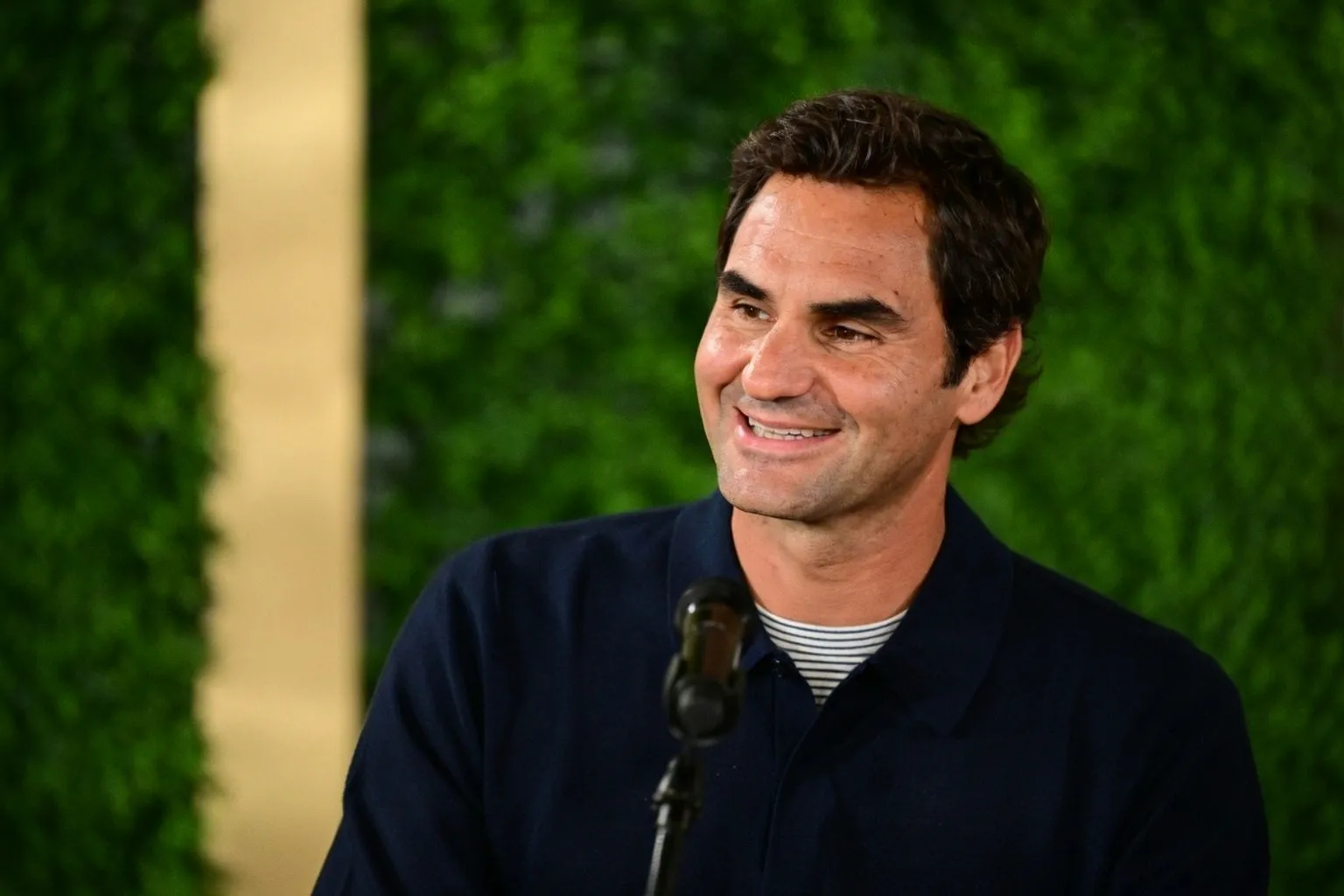
The 45-year-old joined fellow Class of 2026 inductee Mary Carillo ahead of tonight's 6 p.m. ceremony, trying to explain what drove him from a Basel ball boy's bench to 20 Grand Slam titles and a record 237 consecutive weeks at world No. 1. Like most champion autobiographies, the answer revealed as much about the limits of self-knowledge as it did about the legacy itself.
The Crossroads Nobody Sees
Federer's chosen metaphor was crossroads — those alleged inflection points where a career either compounds or collapses. "I must have, when I've gotten to, I don't know, crossroads in my life — and I'm sure it's the same for Rafa and Novak, as well — is when you come to those crossroads in life, you have a choice to make," he said.
The language is worth dissecting. "I don't know" — from a man whose tactical biography could fill volumes. The cognitive load of two decades at the top doesn't just happen; it requires active maintenance, a private machinery the public rarely sees. Federer framed his decision-making as a private wrestling match that ends in release: "I would have wrestled with myself to the right decision, and then when it was taken, I was free again."
It's a tidy narrative. Almost too tidy. Champions rarely remember the close calls accurately — they edit the attrition, polish the doubts, and serve back a version that makes the inevitability feel earned in real time. Federer's crossroads sound less like dramatic forks in the road and more like the steady, grinding work of staying himself under surveillance.
The Center Court Appetite
Here's the line that strips away the mythology: "I liked to be on center court. I preferred center court over Court 5 or Court 18 or whatever it was."
Not the Swiss mountains. Not the milk chocolate and the meticulous parents who "supported me just the right amount." Just appetite — a specific, almost feral appetite for being watched, judged, and expected to deliver. Federer was a ball boy in Basel for Jimmy Connors and Martina Hingis long before his first junior title. A 1998 US Open boys finalist by his late teens. He later partnered Hingis on a Swiss Dream Team that captured the Hopman Cup. The résumé reads as inevitable in retrospect, but the psychology he's describing isn't inevitability. It's preference. He wanted to be the person on the loudest court.
"I wanted to be that person, you know?" he added. "So I think I embraced the pressure. I wanted that, even though it's been nice retired and not having to face that music anymore."
The retirement postscript is the tell. The man who just credited his appetite for the spotlight with everything is now describing, with audible relief, the quiet of not having to perform. What does that contradiction say about the drive that carried him to 103 career titles?
The Asterisks on the Honor
Federer called the induction "a huge, huge honor" — standard Hall of Fame currency — and immediately hedged. "It's something you cannot really you feel you can control," he said, reaching for a comparison he then undercut: "becoming Sportsman of the Year, but like with asterisks all around it."
That word — asterisks — is the one worth tracking. Federer understands, perhaps better than anyone alive, that voting bodies and media panels are not tennis matches. The outcome is real, but the mechanism is opaque. He knows the game from the inside; he knows the honor from the outside. The ambiguity suits him, whether he admits it or not.
At 45, with 103 career titles behind him and tonight's ceremony airing live, Federer conceded he cannot yet metabolize the moment. "Only when it's all said and done, I'm going to be able to explain and tell you actually how it truly feels." For a player who spent two decades projecting certainty, the uncertainty is almost disarming. The crossroads, it seems, keep coming — even in retirement.