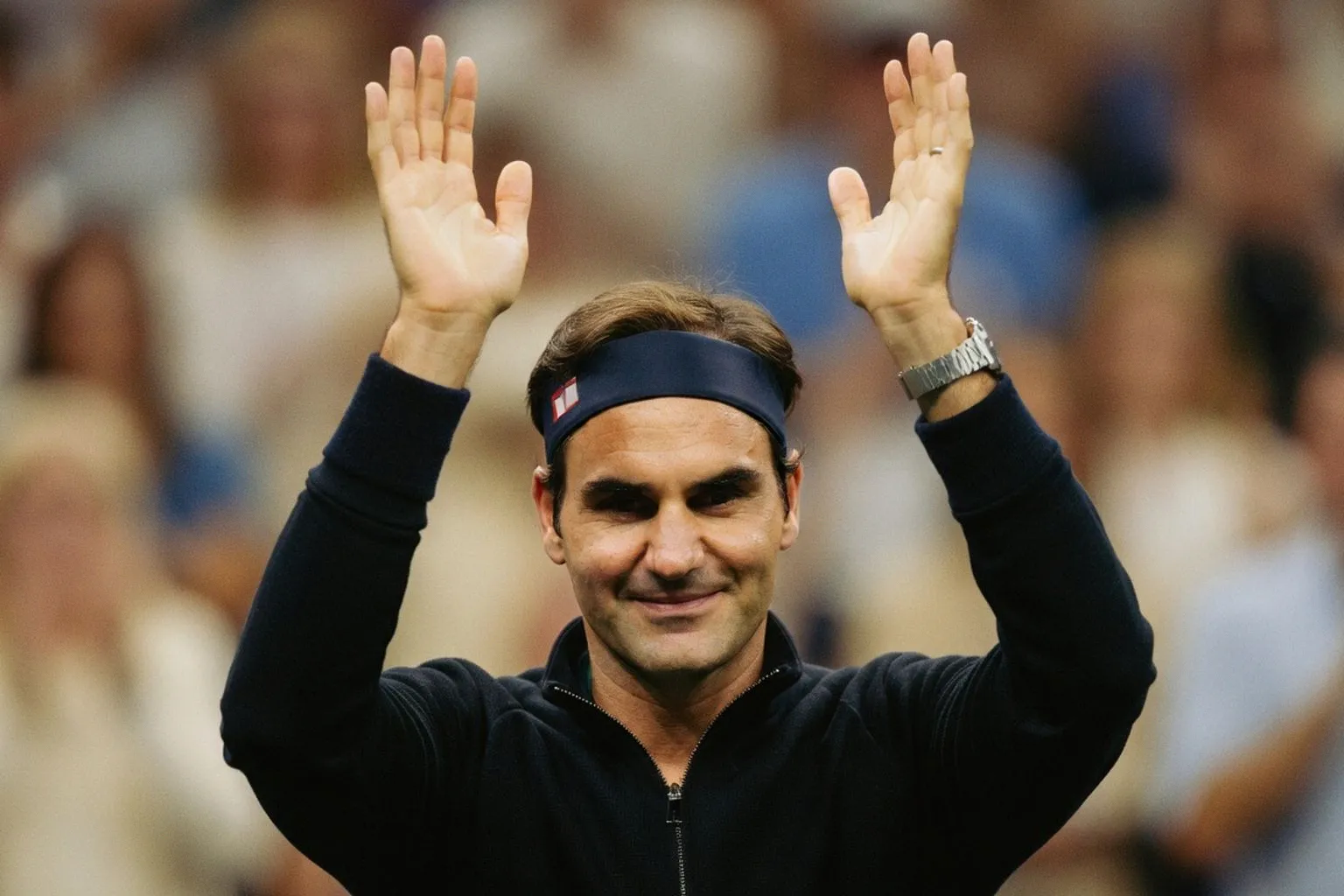
The most emphatic answer in tennis this week came not from a racket but from Roger Federer's mouth: "No, no, no, no. No, not at all." As reported by the Daily Express, the 20-time Grand Slam champion has shut down any fantasy of a competitive return while his old rival Serena Williams quietly laces up for another act. The contrast is almost clinical.
The Refusal, Repeated
Federer's denial landed like a man swatting away an annoying fly — six no's in a row, delivered with the nervous laughter of someone who suspected the question was coming. At 45, with a body he openly calls "done," he has no intention of following Serena back through the six-month doping pool entry window, onto the wildcards circuit, into the weekly attrition of a full tour. He named the obstacles himself: too busy, too few exhibition dates, too many logistics. "I'm barely finding time to play any exhos," he said. "So imagine a tour."
The Swiss has other things on his schedule. An exhibition singles against Andy Roddick at the US Open earlier this week, doubles alongside John McEnroe and Andre Agassi, the celebrity match planned for the Shanghai Masters, the Australian Open doubles exhibition back in January. Four or five appearances a season, he says — enough to "connect with the tennis community again" without the cognitive load of rankings, travel, and the endless parade of press conferences asking whether he's changed his mind.
Serena's Mirror, and Why It Cuts
This is where the psychology turns interesting. Serena didn't drift back — she walked back, deliberately, through Queen's Club doubles, into Wimbledon singles, into Cincinnati where she teamed up with Venus. The Williams sisters, per the Express, are set to compete in the upcoming US Open. That is not nostalgia. That is someone stress-testing whether the competitive architecture still holds under live fire.
Federer watched his contemporary re-enter the same stage they both exited in 2022 — Serena at Flushing Meadows, Federer at the Laver Cup weeks later — and chose the spectator's chair. The body language tells you everything: one player still believes the engine can fire, the other has inspected it, found the wear, and politely closed the hood. One is chasing a feeling. The other is protecting a legacy from the unraveling that comes with one bad loss too many.
Newport, and the Time Machine
Saturday's induction into the International Tennis Hall of Fame in Rhode Island gives Federer a ceremonial punctuation mark. He framed it himself as stepping into a time machine, a way to slow down and look back at a career that, with four children in the house, already blurs at the edges. The Hall of Fame doesn't ask you to keep competing. It asks you to let others tell the story while you sit still.
So the rivalry's final chapter is not who plays longer — Serena, clearly, by months — but who manages the exit without breaking stride. Federer's six emphatic no's read less like refusal and more like a man who finished his own psychological match before the question was ever asked. He is a fan now. He said so himself. And for once, it sounds like the truth.