Ilie Năstase and the 1972 US Open: A Legacy of Chaos
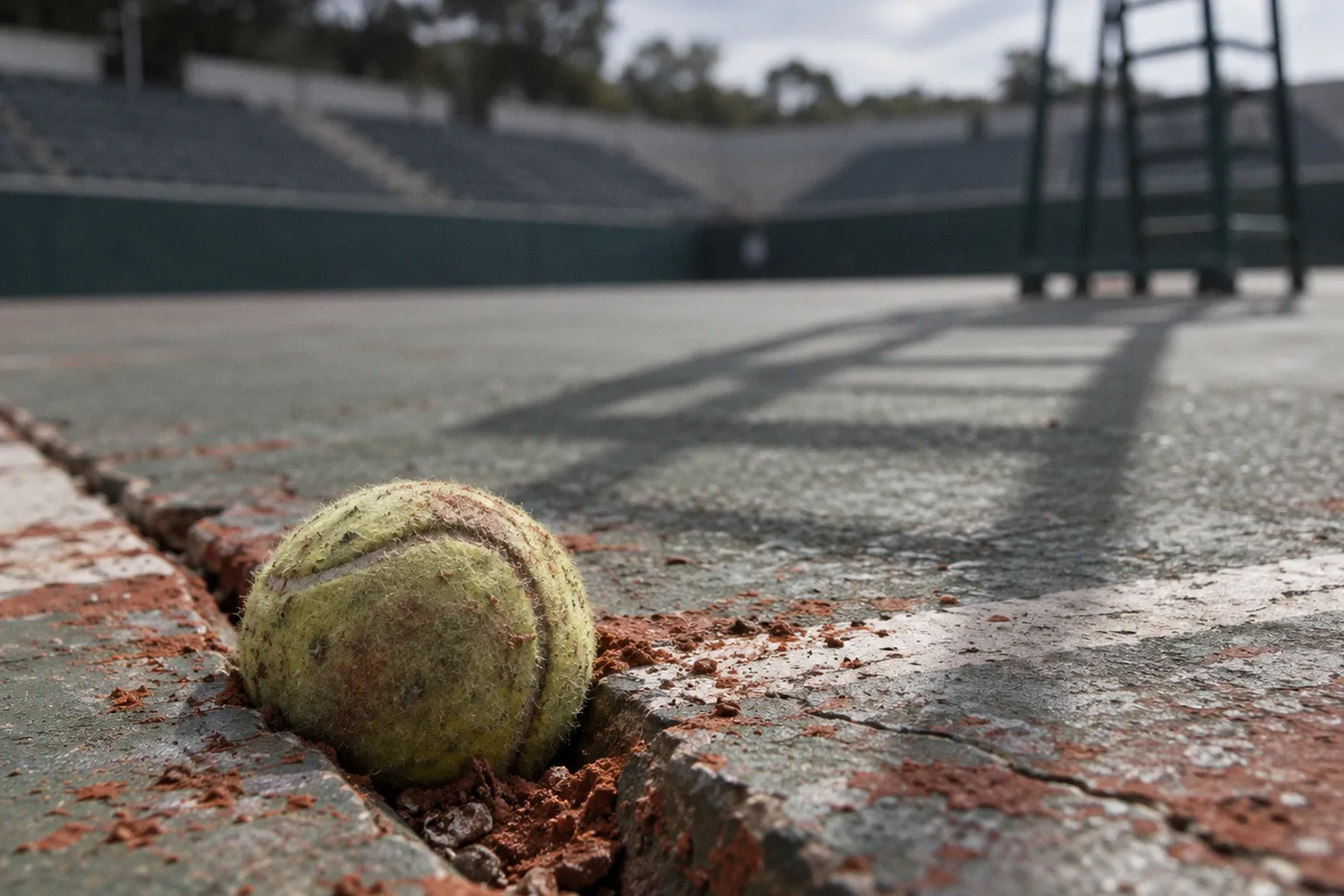
There is a particular quality of late-August air in Queens that anyone who has stood on the grounds of the old West Side Tennis Club at Forest Hills would recognize: humidity pressing down on the grass, every surface feeling slightly slower and heavier than the player expects. By the time the 1972 US Open men’s singles final arrived in September, the courts had absorbed a full tournament’s worth of foot traffic, morning maintenance and afternoon sun. The grass was no longer pristine. It was worn in places, its blades compressed into a surface where the ball stayed low and skidded unpredictably.
For a player like Ilie Năstase, who built his game on touch, improvisation and an almost supernatural ability to read the geometry of a rally, those imperfections were not obstacles. They were invitations.
The 1972 US Open final is remembered, when it is remembered at all, as the match in which Năstase won his first Grand Slam singles title. The scoreline—3–6, 6–3, 6–7, 6–4, 6–3—tells a story of resilience, of a man who fell behind and clawed his way back. But the numbers alone cannot capture what happened on that court, or why the match mattered beyond the trophy presentation and the $25,000 winner’s check that Năstase took home.
This was the final in which tennis’s modern “bad boy” archetype announced itself with unusual force. It was a match in which the tension between athletic brilliance and behavioral spectacle became impossible to ignore. And it was a moment when the sport’s old guard watched one of its most significant stages being reshaped not only by talent, but by temperament.
The Forest Hills Atmosphere: A Clash of Styles and Temperaments
To understand the 1972 final, it helps to understand both men and the setting in which they met. Forest Hills was, by then, already a place of contradictions: tradition-bound and worn, elegant and outgrown, the last great bastion of American tennis’s country-club identity before the tournament eventually moved to Flushing Meadows.
The grass courts demanded a particular kind of tennis. The bounce was low, points could turn quickly, and touch often mattered more than brute force. The atmosphere was intimate in a way that modern stadium tennis rarely is. Spectators sat close to the action, voices carried across the court, and a player’s body language was visible to almost everyone in the stands. There was very little room to disappear.
Arthur Ashe, seeded sixth that year, represented composure. His game was built on clean ball-striking, tactical clarity and a quiet authority that extended from his serve to his bearing. He was a former 1968 US Open champion and remained one of the most respected figures in the sport, a player whose intelligence on court was matched by a dignity off it that made him a towering figure in American life.
That distinction matters. Ashe was not the defending champion in 1972; Stan Smith had won the title in 1971. But Ashe arrived at Forest Hills with the authority of a former champion and the expectations that came with it. When he took the first set 6–3 and then moved two sets to one ahead after winning the third in a tiebreak, the narrative seemed to be taking shape. The American had established control, and the match appeared to be moving toward the sort of orderly conclusion that Forest Hills traditionally preferred: strong tennis, restrained emotion and a champion accepting the applause with grace.
Năstase had other plans.
The Romanian had arrived at the Open with a reputation that preceded him like a weather front: brilliant, unpredictable, maddening and impossible to ignore. His game was a study in contradiction. It was technically exquisite but deliberately unorthodox, capable of breathtaking shotmaking and sudden lapses that seemed to have nothing to do with his ability to strike a ball.
Where Ashe was architecture, Năstase was improvisation. Where Ashe sought control, Năstase sought disruption—not always through his racket, but through the entire atmosphere of the match.
He was one of the most gifted natural players of his generation, with hands capable of producing spins and angles that seemed to challenge the logic of a grass court. Yet he was also a performer and a provocateur. He understood, perhaps more clearly than any player before him, that a tennis match is not only a contest of strokes. It is also a contest over rhythm, attention and psychological space.
The 1972 final was not decided by who hit the better forehand. It turned on who controlled the emotional temperature of the court, and Năstase understood that distinction better than almost anyone.
Ashe’s authority came from making the match feel legible. Năstase’s came from making it unstable. He could turn a conventional point into a piece of theatre with a change of pace, a drop shot, a gesture or a sudden refusal to let the match proceed at its expected speed. That did not make every act calculated. It made the uncertainty itself part of his influence.
The 2–4 Deficit: How Năstase’s Gamesmanship Unraveled Arthur Ashe
The fourth set is where the match pivoted, and where much of the final’s enduring mythology was formed. Ashe led two sets to one and held a 4–2 advantage. He was in a commanding position, but the score did not mean that he was four games from the title. He still needed to win the fourth set and then the fifth. What the scoreboard showed was a two-game lead in the fourth set, not a near-completed championship.
That difference is more than mathematical housekeeping. It changes the shape of the drama. Ashe was ahead, but the match remained open. Năstase did not need to perform a miracle from the edge of defeat; he needed to disrupt the set before Ashe could convert his advantage into something more decisive.
On a grass court at Forest Hills, with Ashe serving well and carrying the momentum of the third-set tiebreak, the American was in the kind of position that players of his calibre would expect to exploit. Năstase, facing the danger of losing the set and placing the match beyond his reach, reached into the repertoire that made him both extraordinary and infuriating.
He slowed the pace. He engaged with the crowd. He questioned calls and adjusted his equipment. He used the small interruptions and frictions of a match to prevent the contest from settling into Ashe’s preferred rhythm. Some of this was gamesmanship; some of it was simply Năstase being Năstase, unable or unwilling to separate his competitive personality from the tennis itself.
The precise texture of those moments is difficult to reconstruct with complete confidence. The match belongs to an era before every exchange was preserved from multiple angles, before television replays and digital archives turned on-court behaviour into a permanent record. Later accounts could agree on the broad impression while differing over the sequence and intention of particular incidents.
What is clear is that the rhythm changed. Ashe, whose game depended on concentration and controlled execution, found the match becoming less orderly. The friction between the composed American and the mercurial Romanian became the final’s defining dynamic.
Năstase won four consecutive games from 2–4 to take the fourth set 6–4. That sequence did not prove that he had somehow talked or gestured his way to victory. It showed something subtler and more important: he had managed to turn a dangerous deficit into a new kind of contest, one in which Ashe had to respond not only to shots but to the emotional conditions around them.
The fifth set was less complicated. Năstase took it 6–3, his touch and creativity now fully released on a court and in front of a crowd that had surrendered to his particular gravity. Ashe had not been outclassed for the entire match. He had been drawn into a contest whose terms kept changing, and Năstase was better equipped to live inside that instability.
This is the part of the 1972 US Open controversy that continues to interest tennis historians. Gamesmanship is rarely a single action. It is an accumulation of delays, reactions, gestures and shifts in attention. A player may never cross one obvious line, yet still alter the emotional balance of a match. Năstase’s genius was that he seemed to understand this balance instinctively.
Pastel Blue vs. Traditional White: The Visual Rebellion of 1972
There is a detail from the final that deserves more attention than it usually receives because it speaks to something larger than clothing. Ashe wore white, the traditional and institutionally sanctioned colour of tennis. Năstase wore a bright pastel-blue shirt that stood out against the green grass and white lines like a small act of visual insubordination.
In 1972, tennis was still negotiating the consequences of its own transformation. The sport had been amateur-only until the Open Era began in 1968, and even four years into professional competition, the old codes retained enormous power. White clothing was not merely a fashion preference. It was a signal of belonging, respect for inherited rituals and acceptance of the sport’s preferred image of itself.
Năstase’s blue shirt was not a manifesto in any formal sense. It would be too neat to pretend that one colour choice represented a fully developed rebellion. But visual details matter in sport, particularly in a period when the boundaries of acceptable behaviour and appearance were being tested at the same time.
The contrast was immediate:
| Arthur Ashe | Ilie Năstase |
|---|---|
| White clothing associated with tennis tradition | Pastel blue that stood outside the expected visual code |
| Controlled posture and measured presence | Expressive body language and theatrical energy |
| A game based on structure and clarity | A game based on variation, touch and disruption |
| Authority expressed through composure | Authority expressed through unpredictability |
The colour mattered because it was visible. In a sport where the margins between players can be razor-thin, the visual impression a player creates becomes part of the competitive fabric. Ashe in white reflected tennis’s traditional self-image: dignified, restrained and proper. Năstase in pastel blue suggested that the sport’s new generation would not always ask permission before expressing itself.
That visual contrast also helps explain why Năstase’s legacy has lasted. He did not merely play differently from the champions who came before him. He looked, moved and behaved differently. The whole package arrived at once, and the effect was difficult for tennis to absorb.
From Roger Taylor to the Final: The Grinding Path to a $25,000 Title
Năstase’s route to the 1972 final was itself a portrait of the player he was: brilliant but never straightforward, capable of genius and unnecessary complication in the same afternoon.
In the second round, he faced Britain’s Roger Taylor in a match that tested every ounce of his patience and nerve. The scoreline—7–5, 6–2, 6–7, 2–6, 7–6—reads like a narrative in miniature. Năstase established early control, appeared to have built a comfortable cushion, then lost the third-set tiebreak and was overrun in the fourth. His tournament finally came down to a fifth-set tiebreak.
The Taylor match reveals a pattern that would define Năstase’s career. He could dominate when the mood struck him, producing tennis that made an accomplished opponent look ordinary. But he also seemed to require the emotional charge of adversity to reach his highest level. The two sets he won comfortably were followed by a stretch of tennis so indifferent that it bordered on self-sabotage. Then, with elimination close, he summoned the precision and nerve to survive.
That was the texture of Năstase’s campaign: not sustained excellence in the conventional sense, but repeated acts of desperate brilliance. He did not move through the draw like a machine. He lurched, dazzled, became distracted, recovered and found a way forward.
By the time he reached the final against Ashe, he had already demonstrated that a match could be lost and recovered several times before the result was settled. That knowledge was a weapon. Năstase knew what it felt like to be in control, to lose control and to find a different route back into the contest. When he turned the 2–4 deficit into a four-game run in the fourth set, he was drawing on more than confidence. He was drawing on a tournament-long familiarity with disorder.
The prize money—$25,000 for the champion—feels almost quaint by modern standards, but it was meaningful in 1972. The sum also formed part of the changing professional landscape. Players were no longer competing solely for prestige or the approval of amateur institutions. Tennis was becoming a career, a spectacle and an increasingly visible form of entertainment.
Năstase’s victory carried another significance. He was a Romanian player claiming one of the sport’s most important titles in a tennis culture still heavily shaped by Anglo-American traditions. His success challenged assumptions about where authority in the game was supposed to come from. He did not win by imitating the old champions. He won while making his difference impossible to ignore.
The 1972 US Open men’s final analysis therefore cannot be reduced to a question of tactics. Ashe’s serve, Năstase’s touch and the momentum of the fourth set all mattered. So did the larger collision between two models of tennis: one built on discipline and public composure, the other on invention, provocation and emotional volatility.
The Archetype’s Shadow: Why the 1972 Controversy Still Defines Tennis Lore
Every generation of tennis produces its own version of the Năstase question: what happens when a player of undeniable talent refuses to conform to the sport’s behavioural expectations?
John McEnroe would later take the template Năstase sketched at Forest Hills and turn it into a fully realised art form. His arguments with officials became so famous that they sometimes overshadowed his extraordinary shotmaking. Jimmy Connors brought a different kind of intensity, built around fist pumps, confrontation and working-class defiance. In later eras, Nick Kyrgios and other players continued to test the boundaries between entertainment and disruption, personality and unsportsmanship.
The lineage should not be made too simple. Năstase did not invent on-court anger, and no single match created the tennis bad-boy archetype from nothing. Players had been challenging officials, provoking opponents and resisting the sport’s codes long before 1972. What Năstase did was bring those elements together with extraordinary charisma and ability. He made behavioural volatility part of the same performance as the tennis itself.
That is why the final remains central to the history of tennis on-court behaviour. It offered a particularly vivid version of a problem the sport has never solved: where does competitive theatre end and unacceptable conduct begin? If a player disrupts an opponent without breaking a clearly enforceable rule, is that cleverness, manipulation or both? And if the player is also producing exceptional tennis, does brilliance change how the behaviour is judged?
Năstase did not merely win the 1972 US Open. He demonstrated that a tennis court could also be a stage for psychological theatre, and the sport has never entirely escaped that revelation.
The final was not the first time a tennis player behaved badly on court, and it was not proof that gamesmanship alone defeated Ashe. It was more complicated than that. Ashe was a former champion, an elite competitor and a player capable of imposing his own terms. Năstase won because he combined remarkable tennis with an ability to make the match emotionally unstable at precisely the moment he needed it to change.
That combination became the legacy.
Before Forest Hills in 1972, the idea that a Grand Slam final could be shaped as much by temperament as by talent was an uncomfortable suggestion. Afterward, it became one of the sport’s enduring realities. Tennis continued to debate code violations, crowd management, equipment delays, arguments with officials and the line between gamesmanship and cheating. The arguments changed with the era, but the underlying question remained recognisable.
How much disorder can a great player introduce before the disorder becomes part of the contest itself?
Năstase’s first Grand Slam singles title was also an early demonstration of tennis’s modern media consciousness. The sport had always generated stories, but the 1972 final generated a character: a player whose contradictions were so vivid, entertaining and unsettling that the narrative could not be contained within the scoreline.
Ilie Năstase won 3–6, 6–3, 6–7, 6–4, 6–3 on a worn grass court in Queens. He claimed the title through touch, nerve, improvisation and a refusal to let the match remain emotionally tidy. The victory did not make him the only player to turn tennis into theatre, nor was it the final word on bad behaviour. But it placed him permanently at the centre of the conversation.
He was not simply a champion who happened to be controversial. He was the player who showed how controversy could become part of a champion’s competitive identity. Tennis has been more interesting—and considerably more complicated—ever since.